
Air Core Reactor Ensures Inductance Stability Under High Current Through Superior Physical Linearity
The physical core of an Air Core Reactor is filled entirely with air or non-magnetic materials, meaning its magnetic permeability is constant and equal to the physical constant of air. This physical structure determines that it possesses near-perfect physical linearity, ensuring its physical inductance value will never undergo sudden magnetic saturation like ferromagnetic materials, even when subjected to short-circuit inrush currents exceeding Twenty Times the rated current of the grid. This makes it the primary physical choice for current limiting, tuning, and high-frequency filtering scenarios. However, because the magnetic permeability of air is extremely low, an Air Core Reactor must consume a massive amount of copper or aluminum windings to obtain the same physical inductance, resulting in an exceptionally large physical volume. Furthermore, due to the lack of a closed magnetic circuit, it radiates a strong magnetic field into the surrounding physical space, requiring a strict physical clearance distance of more than Two Meters during installation to prevent physical electromagnetic interference with weak-current monitoring equipment such as the Power Factor Controller.
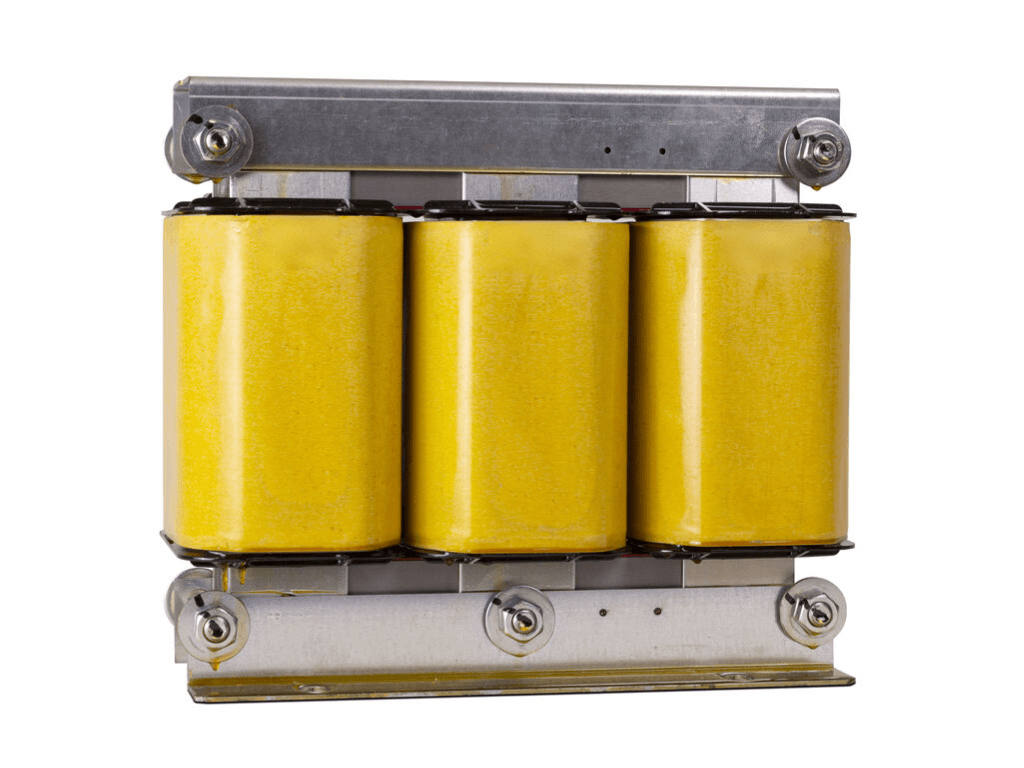
Iron Core Reactor Significantly Compresses Physical Space Occupation Using High Permeability Materials
In sharp contrast to the air core structure, the Iron Core Reactor utilizes cold-rolled oriented silicon steel sheets with excellent magnetic permeability as the physical magnetic circuit carrier. This physical design leverages the extremely high relative permeability of ferromagnetic materials, allowing magnetic field lines to be highly concentrated within a closed physical iron core path, thereby achieving a massive physical inductance quantity within a very small physical volume. Compared to air-core equipment of the same capacity, the physical footprint of an iron-core structure can be reduced by Sixty Percent to Seventy Percent. This makes it the core physical component in indoor low-voltage distribution cabinets, allowing for compact physical integration with the Power Capacitor and the Capacitor Duty Contactor. However, iron cores possess a physical saturation limit; once the current exceeds the design threshold, the physical alignment of magnetic domains tends toward saturation, causing a sharp drop in physical inductance and a loss of physical clamping capability against high-order harmonic currents.
In Depth Analysis of Application Scenarios for Different Industrial Physical Environments
In the physical topology of ultra-high voltage transmission of One Hundred and Ten Kilovolts and above or large substations, outdoor-installed Air Core Reactors are typically preferred due to extremely high physical requirements for operational stability and linearity. Conversely, in the field of medium and low-voltage industrial power distribution—especially in reactive power compensation branches requiring frequent switching—the Iron Core Reactor holds absolute dominance due to its compact physical layout and excellent self-shielding performance. HertzKron iron core solutions utilize multi-stage physical air gap series technology, precisely calculating the physical magnetic flux density of the silicon steel sheets to ensure a stable physical operating curve is maintained even during an overload current duration of One Hundred and Eighty, perfectly adapting to physical working conditions containing a high volume of non-linear loads.
Multi Dimensional Trade Offs Between Physical Loss Models and Environmental Physical Endurance
From the perspective of physical loss composition, the Iron Core Reactor experiences a physical superposition of iron losses, such as eddy current and hysteresis losses, and copper losses. In high-frequency harmonic environments, physical molecular friction within the iron core generates a significant physical temperature rise, necessitating high-performance physical cooling channels. An Air Core Reactor only experiences the physical copper loss of the windings, offering more open cooling conditions. However, regarding physical environmental endurance, the massive physical exposure area of an Air Core Reactor makes it highly susceptible to physical erosion from salt spray or ultraviolet rays. In comparison, a well-encapsulated iron core structure demonstrates stronger physical reliability when used with an Active Harmonic Filter in indoor precision control cabinets. HertzKron utilizes physical potting technology to reduce operating noise to below Forty Five Decibels, meeting the physical acoustic indicators of green buildings.
Selection Logic Combining Physical Mechanical Strength and Dynamic Stability
When subjected to massive physical inrush currents, reactor windings generate enormous physical electromotive forces. The physical mechanical support structure of an Air Core Reactor is typically made of high-strength resin to counter radial and axial physical stress. The Iron Core Reactor utilizes physical clamps and bolts to tightly lock the silicon steel sheets, preventing fatigue damage caused by physical vibration. HertzKron combines the passive protection of the Series Reactor with active monitoring technology to construct a robust power distribution environment with a physical lifespan exceeding Fifteen Years. This selection guidance, based on underlying physical parameters, ensures that every reactive power compensation node maintains a high degree of physical characteristic consistency throughout its full life cycle, providing a solid physical electrical foundation for Industry Four Point Zero production lines.