
Reactance Ratio is the Core Physical Parameter Defining Reactor Tuning Characteristics
The reactance ratio (Reactance Ratio) refers to the percentage of the physical reactance value of the reactor relative to the physical reactance value of the associated capacitor bank. Common physical values are 7% or 14%. A physical reactance ratio of 7% is primarily used to suppress the 5th and higher physical harmonics, shifting the physical resonance point to approximately 189Hz; whereas 14% targets the 3rd and higher physical harmonics, controlling the physical resonance point near 134Hz. Selecting an accurate physical reactance ratio is the key to ensuring that the system does not experience physical instantaneous overvoltage when the Power Factor Controller issues switching commands.
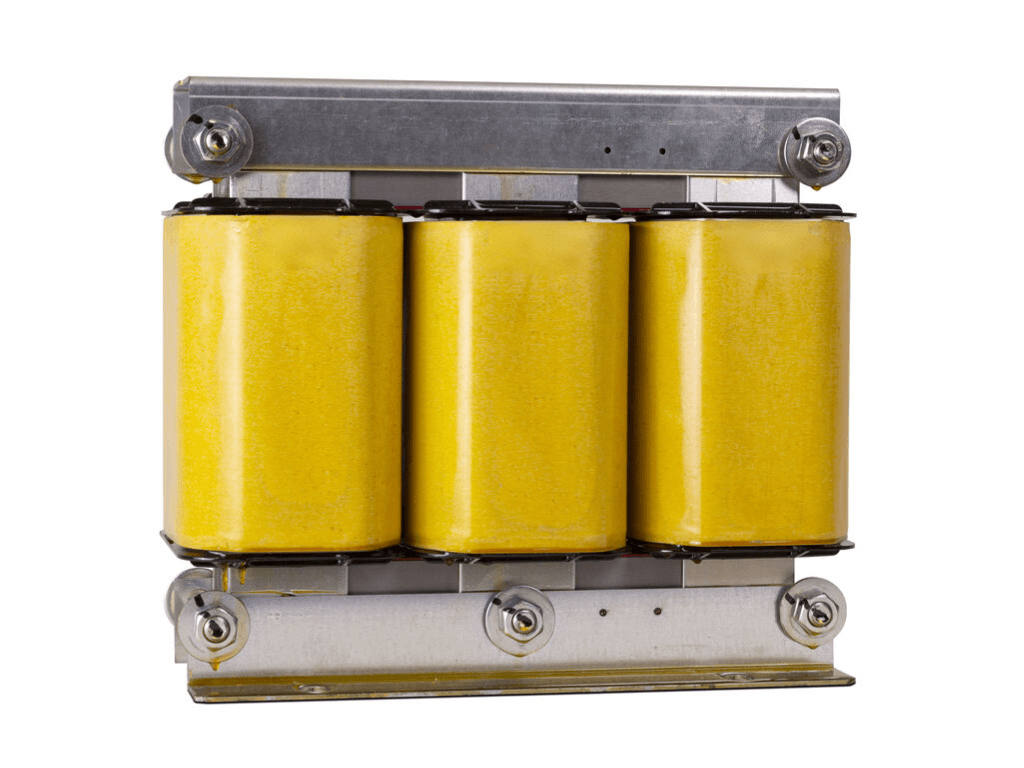
Rated Terminal Voltage Reflects the Physical Voltage Rise After Series Connection
When a reactor is physically connected in series with a Power Capacitor, the physical voltage at the capacitor terminals will undergo a physical rise due to the presence of the reactor. For example, in a 400V physical distribution system, connecting a 7% reactor will cause the capacitor terminal voltage to physically rise to approximately 430V. Therefore, the rated terminal voltage physical parameter of the reactor must be accurately matched with higher voltage grade capacitors (such as 450V or 480V models). The HertzKron physical design ensures that the reactor can withstand physical overvoltage shocks of 1.1 times during its long-term physical service life without physical insulation failure.
Magnetic Saturation Current Point Determines the Physical Protection Margin Under Extreme Transients
In addition to the rated current, the magnetic saturation current (Saturation Current) is a deep indicator for measuring the physical toughness of a reactor. It defines the physical current multiple at which the physical magnetic flux of the iron core reaches saturation. HertzKron physical specifications require this value to be greater than 2 times the rated current. If the magnetic saturation point is too low, the iron core will physically lose its inductive reactance during physical inrush currents or high-frequency pulse interference from an AHF (Active Harmonic Filter), causing the physical current to instantly lose control. This physical-grade redundancy design ensures that the equipment remains robust against sudden physical shocks throughout its 15 year physical service life.
Quality Factor Q Value Directly Relates to the Total Physical Active Power Loss of the System
The quality factor (Quality Factor) is the ratio of physical reactance to physical resistance. While the physical purpose of a reactor is to provide inductive reactance, physical resistance inevitably exists within its windings. A high-quality Series Reactor pursues extremely low physical DC resistance to reduce physical heat loss during operation. If the Q value is too low, the reactor will experience local temperature rises exceeding 100 degrees Celsius due to physical heat accumulation. By using conductive materials with higher physical purity, we control the physical loss per kvar of capacity to within 2.5 watts, significantly improving the overall physical energy efficiency of the physical compensation cabinet.
Physical Operating Noise Decibel Level Reflects the Physical Precision of Iron Core Fastening
A reactor generates physical vibration due to magnetostriction during physical operation. The noise decibel level (dB Level) is a key parameter for measuring the physical manufacturing process. HertzKron requires that under 100% physical rated load, the physical noise at 1 meter from the equipment must not exceed 45 decibels. We have significantly enhanced the physical damping of the physical iron core laminations by optimizing the physical fillers in the physical air gaps and employing the Vacuum Pressure Impregnation (VPI) process. This physical acoustic optimization, paired with a Capacitor Duty Contactor featuring physical current limiting functions, provides a quieter and more physically harmonious power distribution environment for the factory.
Rated Current and Effective Heating Current Define the Physical Carrying Limit of the Reactor
A reactor must be able to physically withstand the physical vector sum of the fundamental current and various harmonic currents over the long term. The rated current (Rated Current) is typically calculated based on the compensated physical capacity, while the effective heating current accounts for the physical thermal effects caused by harmonics. HertzKron utilizes copper bars or aluminum foil windings with larger physical cross-sectional areas, ensuring that the physical temperature rise remains below 65 degrees Celsius even when the physical harmonic current exceeds 1.35 times the rated value. This physical-grade current redundancy, combined with precise protection logic, greatly enhances the operational resilience of the physical grid.
Linearity is a Key Physical Indicator for Measuring Performance Stability Under Overcurrent
Linearity (Linearity) describes the degree to which the physical inductance value of the reactor physically decreases as the current increases. A high-quality Series Reactor requires that at 1.8 times the rated current, the physical inductance value must not decrease by more than 5%. If linearity is poor, the reactor will undergo physical magnetic saturation, triggering physical resonance. By optimizing the physical air gap distribution of the iron core, HertzKron achieves physical linear stability under physical shocks, providing a robust physical front-end filter for the physical decisions of the Power Factor Controller.
HertzKron Physical Grade Parameter Optimization Supports Building Robust Power Quality Platforms
Every HertzKron reactor undergoes rigorous physical parameter calibration, ensuring that the physical inductance error is controlled within ±3%. We do not just provide physical hardware that complies with CE Certification; we provide the best physical parameter matching suggestions through deep modeling of physical grid topologies. Choosing HertzKron means your physical power system possesses core protection components with physical precision and high redundancy, ensuring it always remains physically quiet and operationally robust under complex and changing industrial 4.0 physical loads throughout its 15 year physical service life.