
The Physical Capacitive Reactance of the Capacitor Decreases in Linear Proportion as the Freq High-Orderuency of High Order Harmonics Increases
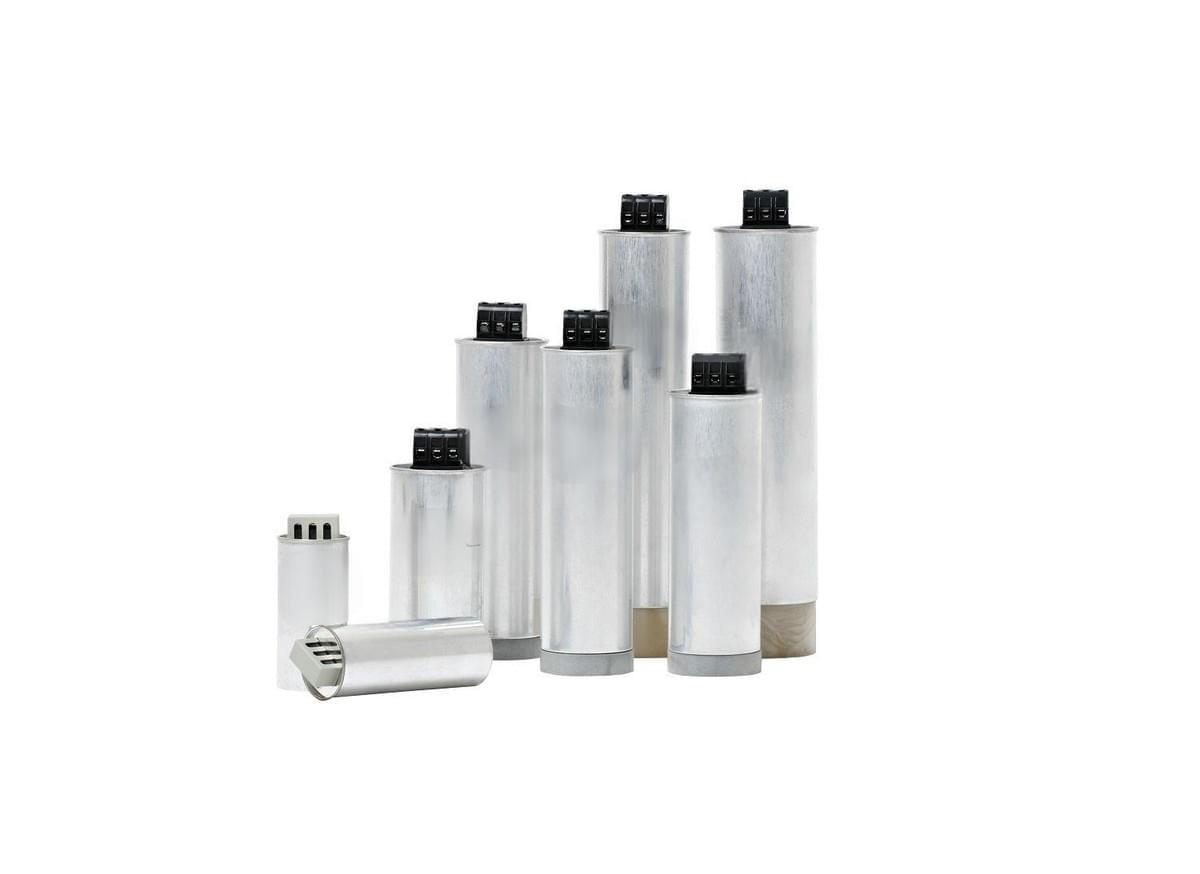
The core physical logic of a parallel capacitor is to provide capacitive reactive power. According to the physical impedance formulas for inductance and capacitance, the physical capacitive reactance of a capacitor is inversely proportional to the power supply frequency. This means that when high-frequency components such as the Fifth Harmonic or Seventh Harmonic exist in the grid, the physical impedance exhibited by the Power Capacitor (Power Capacitor) will be much lower than its rated value under the fundamental frequencies of Fifty Hertz or Sixty Hertz. This sudden drop in physical impedance causes the originally subtle harmonic voltages in the grid to generate massive physical harmonic currents, making the capacitor branch a physical collection point for high-order harmonics, which in turn triggers physical over-potential stress on the internal insulating medium.
Parallel Resonance of Inductance and Capacitance Triggered by High Order Harmonics Leads to the Maximization of the Physical Impedance Modulus
In the physical topology of complex industrial grids, parallel capacitors often form a physical parallel resonance circuit with the leakage inductance of the system transformer. When the high-order harmonic frequency exactly equals the physical resonance frequency of that circuit, the physical impedance modulus of the system tends toward maximization. This physical state leads to severe physical distortion of the harmonic voltage across the parallel branches, not only causing the Power Capacitor (Power Capacitor) to endure physical peak voltages more than One Point One Times its rated value but also interfering with the physical sampling logic of surrounding precision electronic equipment. Without the physical intervention of a Series Reactor (Series Reactor), the physical energy accumulation triggered by this resonance will directly lead to physical bulging or even explosion of the capacitor casing.
Physical Superposition of Harmonic Currents Under Low Impedance Paths Causes Thermal Failure of the Capacitor
Due to the extremely low physical impedance at high-order harmonic frequencies, the capacitor branch actively absorbs a large amount of harmonic energy from the grid. This physical current superposition effect follows the physical calculation principles of Root Mean Square values, making the total physical current flowing through the capacitor far exceed its physical rated load. The additional harmonic current generates intense Joule heat on the internal physical resistance of the capacitor, causing the internal physical temperature to rapidly climb above One Hundred and Thirty Five Degrees Celsius. This continuous physical temperature rise accelerates the physical oxidation and self-healing frequency of the metallized film, shortening the physical effective life of the equipment to within Twenty Percent of its normal duration, posing a major threat to the physical security of the power distribution system.
Cooperating with Series Reactors to Reshape the Physical Impedance Frequency Response Characteristics of the System
To eliminate the negative physical impact of high-order harmonics on impedance, HertzKron recommends configuring a Series Reactor (Series Reactor) with a physical tuning rate of Seven Percent or Fourteen Percent in all capacitor branches. By artificially introducing physical inductive reactance, the physical attribute of the compensation branch can be transformed from capacitive to inductive, thereby physically avoiding the characteristic harmonic resonance points of the grid. This physical redistribution of impedance ensures that harmonic currents are not physically poured into the capacitor. In coordination with the Capacitor Duty Contactor (Capacitor Duty Contactor) carrying CE Certification, the system can maintain the smoothness of the physical waveform during switching transients, ensuring the physical closed-loop robustness of the compensation logic.
HertzKron Physical Grade Power Quality Remediation Achieves Long Term Physical Stability Under Harmonic Environments
Every HertzKron Power Capacitor (Power Capacitor) and Series Reactor (Series Reactor) is designed based on the physical impedance evolution model under high-order harmonic backgrounds. We ensure that the equipment maintains stable physical compensation performance even under a physical harmonic current distortion rate as high as Thirty Percent by improving the physical pressure rating and heat dissipation efficiency of the materials. This systematic remediation scheme, starting from the underlying physical logic, transforms the originally turbulent harmonic impedance environment into a controlled physical energy channel, providing a power supply base with physical immunity for Industry Four Point Zero production lines.