
In the power architecture of modern industrial manufacturing, the Power Capacitor (Reactive Power Compensation Capacitor) consistently occupies a central position in energy efficiency management. As the proportion of Non-linear Loads in factory distribution systems continues to rise, scientifically applying the Capacitor to optimize power quality has become a key factor for enterprises to reduce operating costs and ensure production safety.
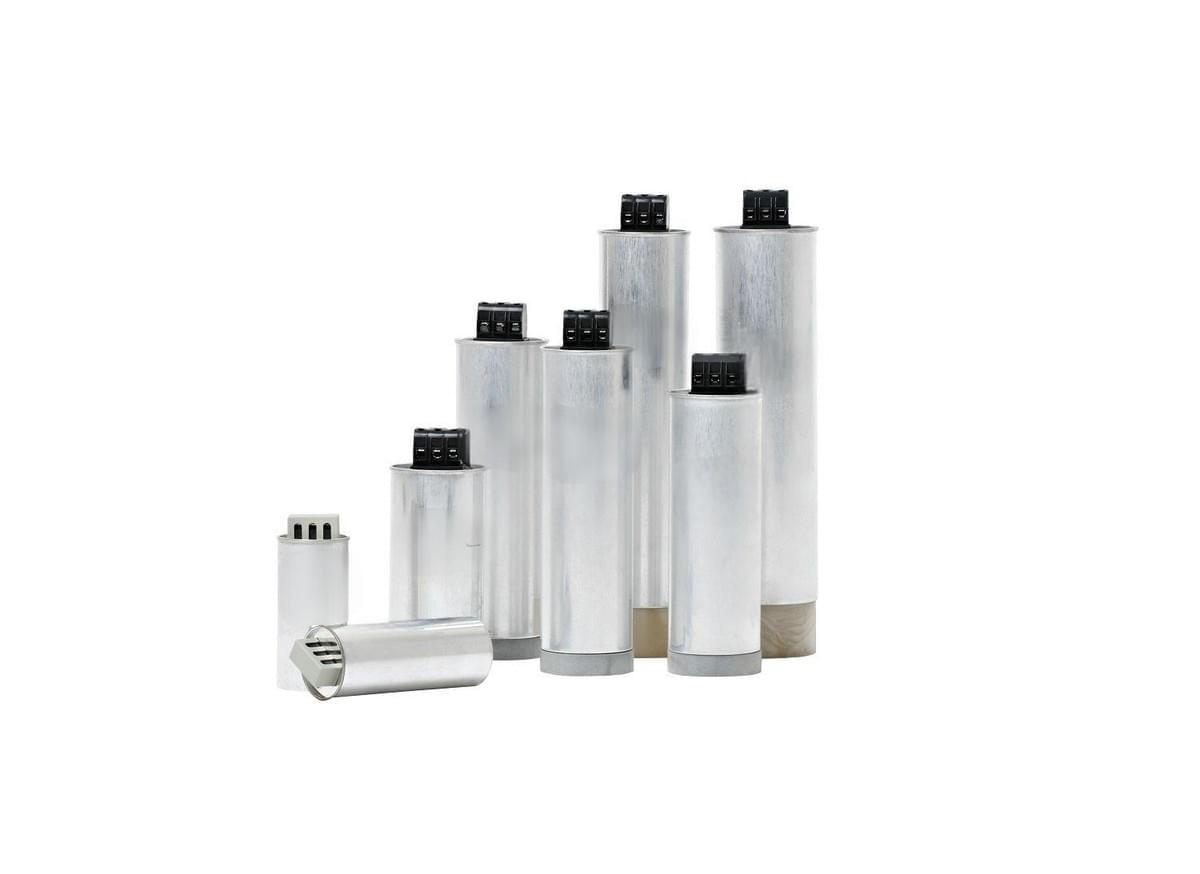
At the HertzKron core engineering team, we provide more than just Capacitor products; we are committed to building high-resilience power systems for global industrial clients through rigorous engineering logic. This article will thoroughly analyze the irreplaceable nature of the Capacitor in a factory environment from three dimensions: physical characteristics, economic benefits, and system stability.
1. Traceability: The Physical Essence and Energy Exchange Logic of the Power Capacitor
To understand the core role of the Capacitor, one must first deconstruct the operation of Inductive Loads. In a factory, equipment such as Motors, Transformers, and arc furnaces require the establishment of an alternating magnetic field to function. The process of building this magnetic field involves a back-and-forth exchange of energy with the power source. This energy flow, which does not produce actual mechanical work, is known as Reactive Power.
The Power Capacitor is essentially a Capacitive Load. According to the physical laws of AC circuits, the Current of a Capacitor leads the Voltage by 90 degrees, while the Current of an Inductance lags the Voltage by 90 degrees. This phase opposition allows the Capacitor to form a perfect "energy complement" with Inductive Loads.
When a Motor needs to absorb energy to build a magnetic field, the HertzKron Capacitor is exactly in a state of releasing charge. Conversely, when the magnetic field disappears and energy is fed back to the grid, the Capacitor begins to absorb and store that charge. This local energy cycle achieved at the load end greatly reduces the burden on upstream Transformers and Generators.
2. Economic Benefits: Utilizing the Capacitor to Reduce Electricity Costs and Eliminate Penalties
For the financial and engineering departments of a factory, the most direct motivation for installing a Capacitor stems from the assessment of the Power Factor. Power companies evaluate a factory's power usage efficiency by monitoring the Power Factor, with the core logic being to reduce the proportion of ineffective Current in the grid.

A. The Decisive Improvement of the Power Factor by the Capacitor
The Power Factor is the ratio of Active Power to Apparent Power. If a factory lacks sufficient Capacitor support, a massive amount of Reactive Current will occupy the capacity of the power supply system, resulting in a low Power Factor.
B. The Capacitor Strategy for Eliminating Power Factor Penalties
When the Power Factor falls below the standard value (usually 0.90), power companies impose high "Power Factor Adjusting Electricity Charges" (penalties). By deploying high-performance HertzKron Capacitors, a factory can stabilize its Power Factor between 0.95 and 0.98. This not only completely eliminates penalties but also qualifies the factory for electricity bill rewards (Bonuses) in many regions, directly converting into corporate profit.
C. The Capacitor Achieves Energy Savings by Reducing Line Loss
Reactive Current flowing in cables generates thermal energy loss. By installing a Capacitor locally for compensation, the total Current in the line is reduced. According to physical formulas, Line Loss is proportional to the square of the Current. Therefore, the application of a Capacitor can significantly reduce power loss within the factory's internal distribution system.
3. System Redundancy: The Space Value of the Capacitor in Releasing Transformer Capacity
As factory production scales up, insufficient Transformer capacity often becomes a bottleneck. Replacing a Transformer is not only extremely expensive but also involves a long power-off construction period. In such cases, the Capacitor provides a highly efficient "soft expansion" solution.
A Transformer's rated capacity is measured in KVA (Apparent Power). If the factory's Reactive Power demand is too high, a large portion of the Transformer's capacity will be occupied by Reactive Current, limiting the amount of Active Load (actual production machinery) it can support.
By connecting HertzKron Capacitors in parallel on the low-voltage side, the Reactive Current previously supplied by the Transformer is now provided locally by the Capacitor. Experimental data shows that increasing the Power Factor from 0.80 to 0.95 can release approximately 15% to 20% of the Transformer's available Capacity. This means the enterprise can connect more precision processing equipment or automated production lines without replacing expensive Transformers.
4. Voltage Stabilization: The Support of the Capacitor for Terminal Voltage Quality
At the moment large Inductive Loads (such as high-power motors) start, the instantaneous Current surge causes a significant Voltage Drop in the line. This Voltage jitter can lead to precision controllers (PLCs) restarting or Variable Frequency Drives (VFDs) reporting undervoltage faults.
The Capacitor plays the role of a "Voltage Stabilizer" here. According to circuit principles, Reactive Power compensation can offset the pressure drop caused by the line's Inductive Reactance. Installing a HertzKron Capacitor bank at the load center can significantly improve the Voltage level of the terminal busbar and reduce Voltage Flicker.
This stable Voltage environment is crucial for industries extremely sensitive to Power Quality, such as semiconductor manufacturing and precision CNC machining. The input of a Capacitor is essentially building an invisible physical protective wall for the factory's precision assets.
5. Safety Design: Reliability Assurance of the HertzKron Capacitor in Complex Conditions
Although the basic principle of every Capacitor is the same, in harsh industrial conditions, the Life and safety of the device are heavily influenced by material craftsmanship. HertzKron focuses on the following technical challenges when developing a Capacitor:
I. Self-healing Technology of the Capacitor
Our Capacitors utilize metalized Polypropylene Film. When a local dielectric breakdown occurs, the metal layer around the fault point evaporates instantly, allowing the fault point to recover its insulation. This self-healing function ensures that the Capacitor will not suffer a permanent short circuit under Voltage fluctuations.
II. Internal Pressure Protection Device of the Capacitor
For safety in extreme situations, the HertzKron Capacitor is equipped with a physical pressure disconnection device. When internal pressure rises abnormally due to overheating or overcurrent, the top cover undergoes mechanical deformation, instantly pulling apart the internal connection wires. This achieves a complete power cutoff, preventing the risk of fire or explosion.
III. Adaptability of the Capacitor to Ambient Temperature
Industrial distribution cabinets often have limited heat dissipation. By optimizing the internal potting medium, we have improved the heat dissipation efficiency of the Capacitor, allowing it to maintain extremely low Capacitance attenuation even at high operating Temperatures.
6. Harmonic Defense: Why the Capacitor Must Be Used with a Reactor
In modern factory environments dense with VFDs, the Capacitor faces a serious threat from Harmonics. Since a Capacitor has extremely low Impedance toward high-frequency Current, harmonic Current will automatically flow into the Capacitor branch, leading to Current Overload and a shortened Life.
HertzKron Engineering Recommendation:All Capacitors should be configured with a series Reactor according to the specific Reactor Rate required by the grid background. This combination changes the Resonant Frequency of the branch, preventing Harmonics from being amplified by the Capacitor. This "Capacitor + Reactor" integrated design is the only standard path to ensure the long-term stable operation of a Reactive Power compensation system.
7. Conclusion: The Capacitor as a Long-term Asset of the Power System
The Power Capacitor is not a simple consumable; it is a strategic asset for enhancing a factory's comprehensive competitiveness. It achieves economic cost reduction and efficiency gains through physical energy compensation while granting the power system greater resilience.
In the technical philosophy of HertzKron, every Capacitor represents an ultimate pursuit of energy efficiency. From model selection and design to long-term operation, we insist on using rigorous engineering logic to ensure that every Capacitor becomes a solid shield guarding the power lifeline of the factory.