
In the field of industrial reactive power compensation, the choice of a capacitor's dielectric medium directly determines the safety level and maintenance costs of a power distribution room. As power electronics technology evolves toward high performance and maintenance-free operation, the technological gap between the Dry Type Capacitor and the traditional Oil Immersed Capacitor has become increasingly significant. For modern enterprises pursuing long-term operational stability, understanding the physical advantages and disadvantages of these two capacitor structures is key to optimizing power quality management.
The Physical Evolution of Core Insulation Media and the Material Advantages of the Dry Type Capacitor
The traditional logic of an oil-immersed capacitor involves using liquid insulating oil to fill the internal gaps of a metal casing to achieve insulation and heat dissipation. However, insulating oil faces risks of physical and chemical instability during long-term high-load operation; specifically, oxidation and moisture can lead to a significant drop in dielectric strength. Furthermore, in the event of a severe internal electrical breakdown, liquid oil media can easily expand or even vaporize under the heat of an electric arc, becoming a potential fuel source that triggers secondary fires.
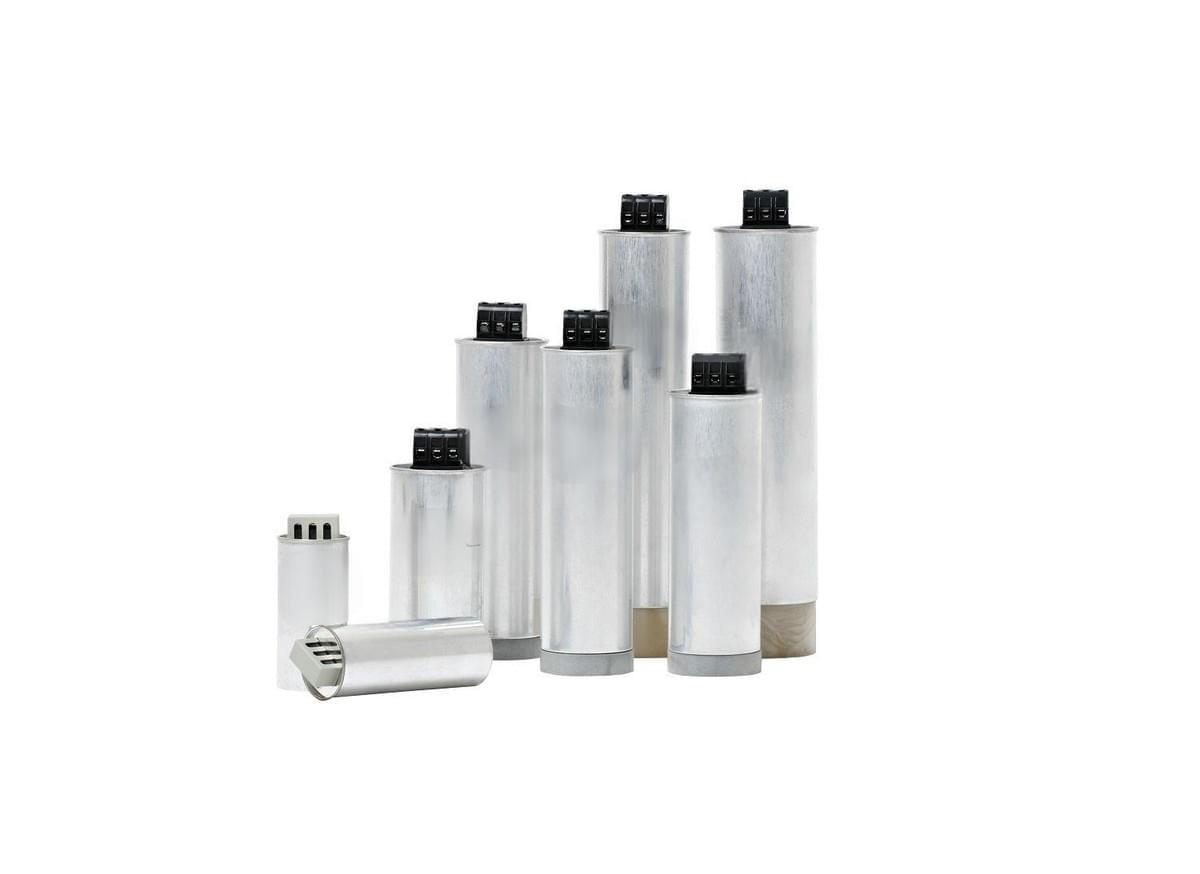
The Dry Type Capacitor adopts a completely different solid material logic. It typically utilizes vacuum-metallized polypropylene film as the electrode and employs special solid resins, inert gases, or modified dry fillers instead of liquid insulating oil. This material innovation eliminates the hidden danger of liquid leakage at its physical source. Because it contains no flammable oil, a dry capacitor does not generate violent oil spraying or explosion diffusion risks during a sudden internal failure, thereby raising the fire safety of the power distribution room to a level of intrinsic physical safety.
Pressure Relief Mechanisms and the Passive Safety Logic of the Dry Type Capacitor
Under extreme harmonic interference or severe system overvoltage environments, pressure accumulation within a capacitor is inevitable. Due to the incompressible nature of liquid media, the metal casings of oil-immersed capacitors must withstand immense internal mechanical pressure. The release of this pressure usually manifests as uncontrolled casing bulging or even rupture with oil spraying, which poses a high risk of insulation contamination and equipment damage to surrounding precision switchgear.
In contrast, the Dry Type Capacitor features more advanced dielectric self-healing functions and a three-stage passive safety mechanism. When a minor localized electrical breakdown occurs in the film, the extremely thin metallized layer at the breakdown point vaporizes instantaneously to form a dry insulating zone, allowing the capacitor to resume normal operation without downtime. Furthermore, these capacitors are typically equipped with precision-designed internal pressure disconnection devices. When internal heat or gas pressure reaches a defined physical threshold due to long-term severe overload, a pre-defined displacement occurs in the folded physical structure at the top, permanently severing the three-phase internal electrical connections. This controlled failure mode ensures the absolute isolation and physical safety of other sensitive components within the distribution cabinet, even at the end of the capacitor's lifespan.
Environmental Adaptability and the Maintenance-Free Physical Properties of the Dry Type Capacitor
Oil-immersed capacitors have strict physical requirements for installation position and angle, and maintenance personnel must regularly check the integrity of seals to prevent oil seepage caused by environmental thermal expansion and contraction. In industrial sites with high altitudes or drastic environmental temperature fluctuations, the leakage of oil media is often the primary cause of sudden drops in insulation levels and system failure.
The Dry Type Capacitor demonstrates superior cross-environmental physical stability. Since there are no flowing liquid media inside, it supports installation at any angle—including vertical, inverted, or horizontal layouts—providing great flexibility for the spatial arrangement of compact reactive power compensation cabinets. Simultaneously, because the possibility of leakage is completely non-existent, dry capacitors achieve nearly zero inspections over their lifespan of several years. For harsh environments such as steel metallurgy, mining operations, or chemical heavy-duty sites, this stability based on all-solid-state materials means a lower probability of sudden downtime and more stable economic returns from power loss compensation.
Heat Dissipation Control and the Thermodynamic Management of the Dry Type Capacitor
Although insulating oil possesses certain heat conduction characteristics, the thermal accumulation of oil temperature often fails to dissipate quickly within a narrow casing under the intense arc stress generated by high-frequency switching, leading to the creation of localized hot spots. Advanced dry designs achieve efficient natural convection cooling by optimizing the winding density of the metallized film and the thermal dissipation coefficient of the casing.
This thermodynamic management system not only effectively handles the additional thermal stress loads brought by high-frequency harmonics but also ensures a uniform distribution of the thermal field across the entire aluminum alloy shell by optimizing the physical spacing of the internal winding units. By utilizing high-grade high-temperature insulation processes, the Dry Type Capacitor ensures that it maintains accurate rated capacitance output and extremely low equivalent series resistance losses in power distribution rooms where ambient temperatures remain high, avoiding capacitance drift or premature insulation aging caused by temperature rise.
Why the HertzKron Brand Dry Type Capacitor is the Essential Choice for Modern Power Distribution Rooms
Through a deep physical comparison of dry versus oil-immersed technologies regarding safety, physical stability, and long-term maintenance costs, the conclusion is clear: the Dry Type Capacitor, with its oil-free physical structure, superior self-healing characteristics, and controlled pressure relief mechanisms, represents the evolutionary direction of industrial power quality governance. For enterprises that prioritize production continuity, fire safety, and asset longevity, choosing the HertzKron brand dry capacitor is not merely a hardware replacement but a systematic upgrade of the physical safety defense capabilities of the entire power distribution system. HertzKron is dedicated to using more hardcore material engineering to ensure that every power distribution room can operate with zero hidden hazards under complex harmonic environments.