
In most companies' balance sheets, power quality management equipment is often mistakenly labeled as a "cost item." However, through physical modeling analysis of AHF (Active Harmonic Filter) operating data, it is essentially a highly liquid energy-efficient asset. Calculating the ROI of AHF cannot rely solely on electricity bills; it must encompass physical impairments across three dimensions.
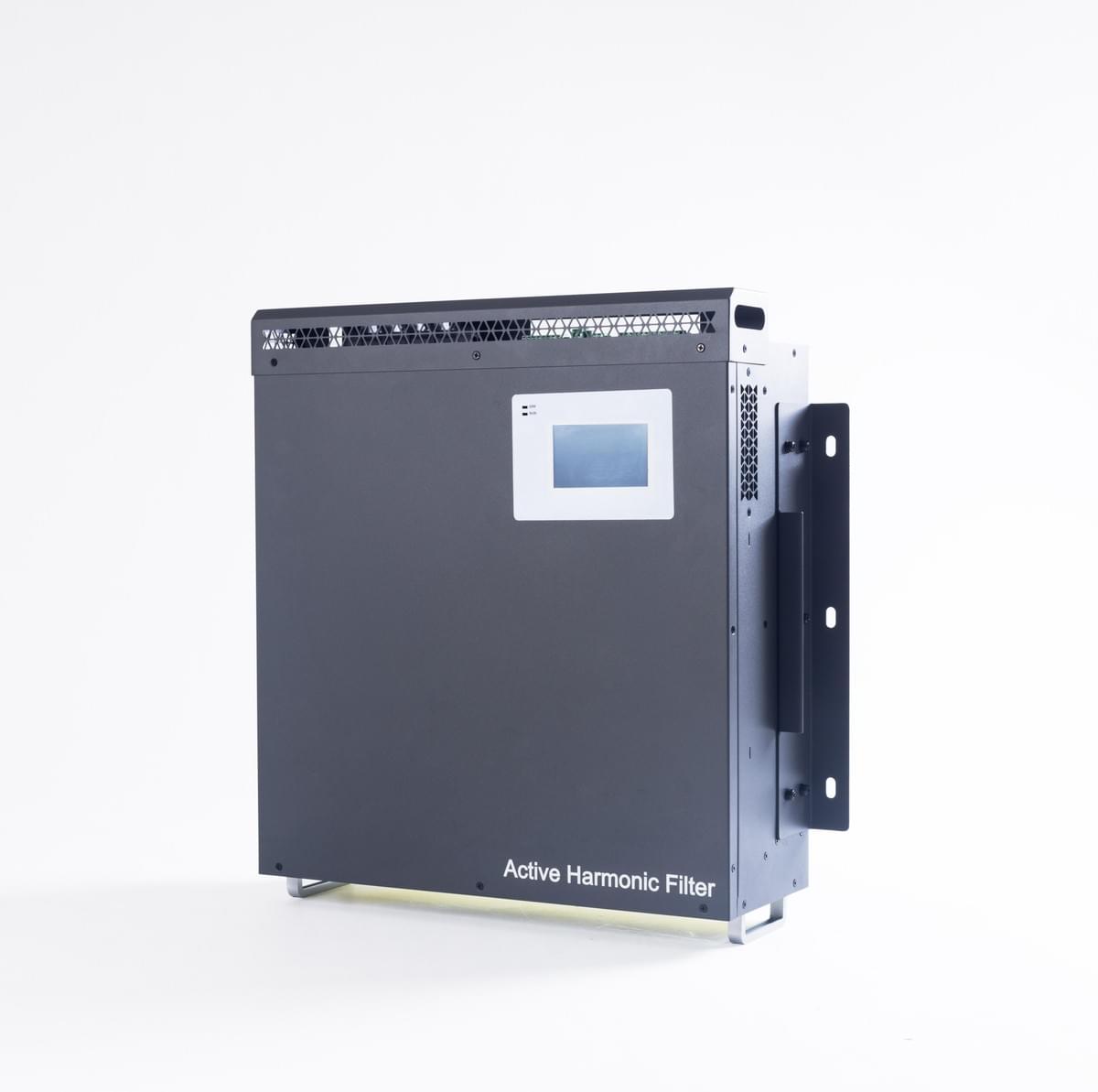
1. Avoidance Gains: AHF (Active Harmonic Filter) Hedging Against Electricity Penalties and Interest Losses
This is the most direct cash flow recovery item in the ROI calculation for an AHF (Active Harmonic Filter). Within the billing structures of power utility companies, harmonic levels exceeding standards cause physical deviations in the measured Power Factor (also known as Cosine Phi), triggering high surcharges for reactive power regulation.
- Physical-Financial Logic: Harmonic currents do not perform useful work, yet they occupy the apparent power capacity of the transformer. If a system suffers from severe 5th and 7th harmonics, even with traditional compensation capacitors, the Power Factor will struggle to reach the required benchmark.
- Actuarial Assessment: The annual savings are equal to the monthly reactive power penalties on the electricity bill multiplied by twelve. In heavy industrial environments, this "Non-operating Expense" caused by substandard power quality typically accounts for Three Percent to Seven Percent of the total electricity expenditure. Deploying an AHF (Active Harmonic Filter) immediately converts these losses into net profit.
2. Loss-Reduction Gains: AHF (Active Harmonic Filter) Closing the Loop on Transformer Heat Loss and Skin Effect
As harmonic currents flow through a distribution system, they generate significant amounts of non-productive thermal energy loss. The intervention of an AHF (Active Harmonic Filter) physically cuts off this energy waste at the source.
- Actuarial Calculation of Thermodynamic Loss: As harmonic frequencies increase, the "Skin Effect" in conductors becomes increasingly severe. This means current concentrates on the surface of the conductor, causing the equivalent resistance of the conductor to increase dramatically, which results in violent heating of cables and transformer windings.
- Efficiency Correction Model: The saved loss is equal to the Square of the Harmonic Current multiplied by the High-frequency Equivalent Resistance. By performing millisecond-level vector offsetting with an AHF (Active Harmonic Filter), the operating temperature of a transformer typically drops by Five to Ten Degrees Celsius. This translates to a reduction in energy waste of One Point Five Percent to Three Percent per year. For a Kilovolt-Ampere scale transformer running continuously, the electricity saved can offset the equipment procurement cost within two years.
3. Asset Life Extension Gains: AHF (Active Harmonic Filter) Reducing Depreciation Rates and Capital Expenditure
This is the most frequently overlooked but financially largest component of the return. The physical value of an AHF (Active Harmonic Filter) lies in its ability to purify the grid, thereby delaying the physical aging process of all downstream sensitive equipment.
- Application of Arrhenius Law: Voltage distortion caused by harmonics leads to accelerated aging of the insulation layers in electrolytic capacitors, motor windings, and electronic components. According to "Arrhenius Law" in physics, for every Ten Degrees Celsius the ambient temperature is reduced, the physical lifespan of the insulation material doubles.
- Asset Premium Calculation: Assume a production line has a total value of One Million US Dollars with a standard depreciation period of Ten Years. In a severely polluted harmonic environment, the actual physical life may be shortened to Seven Years due to thermal stress and over-voltage impacts. Installing an AHF (Active Harmonic Filter) to restore normal power quality is equivalent to recovering approximately Four Point Three Percent of abnormal Capital Expenditure annually. This asset preservation gain carries immense weight in long-term financial statements.
4. Risk Cost of Failure Downtime: AHF (Active Harmonic Filter) Preventing Logic Lockouts and Production Interruptions
Harmonics can interfere with the logical judgment of protection relays, leading to nuisance tripping of circuit breakers. In this scenario, the AHF (Active Harmonic Filter) acts as a "Physical Fuse" for the production line.
- Risk Quantization Model: The lost output value for every hour of unexpected production downtime should be directly credited to the risk-hedging gains of the AHF (Active Harmonic Filter). In high-precision sectors like semiconductor or precision machinery manufacturing, a single logic controller reboot caused by harmonic interference can result in losses exceeding the total cost of several AHF (Active Harmonic Filter) units.
- Maintenance Pressure Reduction: Deploying an AHF (Active Harmonic Filter) significantly reduces phenomena such as contactor tip erosion, transformer humming, and breaker malfunctions. These gains from reduced Operating Expenses (OPEX) provide a consistent and stable positive contribution to the ROI model.
5. Comprehensive Calculation Example: Static Payback Period of a HertzKron AHF (Active Harmonic Filter)
Taking a factory with a rated capacity of One Thousand Kilovolt-Amperes and a Total Harmonic Distortion of Current (THDi) of Twenty-Five Percent as an example:
- Initial Investment (CAPEX): Includes the hardware procurement, installation, and commissioning costs of the AHF (Active Harmonic Filter).
- Annual Operating Savings: The sum of electricity penalty avoidance, transformer efficiency gains, and the reduction in equipment maintenance costs.
- Final Financial Conclusion: In most heavy industrial environments, a CE Certified HertzKron AHF (Active Harmonic Filter) has a static payback period typically between Fourteen to Twenty-Two Months. Starting from the third year, the equipment continues to generate pure economic benefits.