
Excessive Ambient Temperature Triggers Physical Expansion of Electrolytes and Seal Failure in the Power Capacitor
The physical lifespan of a Power Capacitor is intimately linked to its operating environment temperature. When the ventilation and heat dissipation conditions within a distribution cabinet deteriorate, or when the Power Capacitor operates in a high-temperature environment for extended periods, the internal impregnating agent undergoes intense thermal expansion. This physical pressure acts directly on the inner walls of the aluminum casing, causing irreversible physical bulging and deformation. As the internal pressure continues to rise, the sealing end cap of the Power Capacitor undergoes physical displacement, eventually leading to insulating oil leaking along the terminal bushings or weld seams. According to the Arrhenius Law in physics, the physical life of a Power Capacitor is halved for every increase of Eight Degrees Celsius in ambient temperature, making the improvement of the physical cooling environment the primary task in preventing deformation.
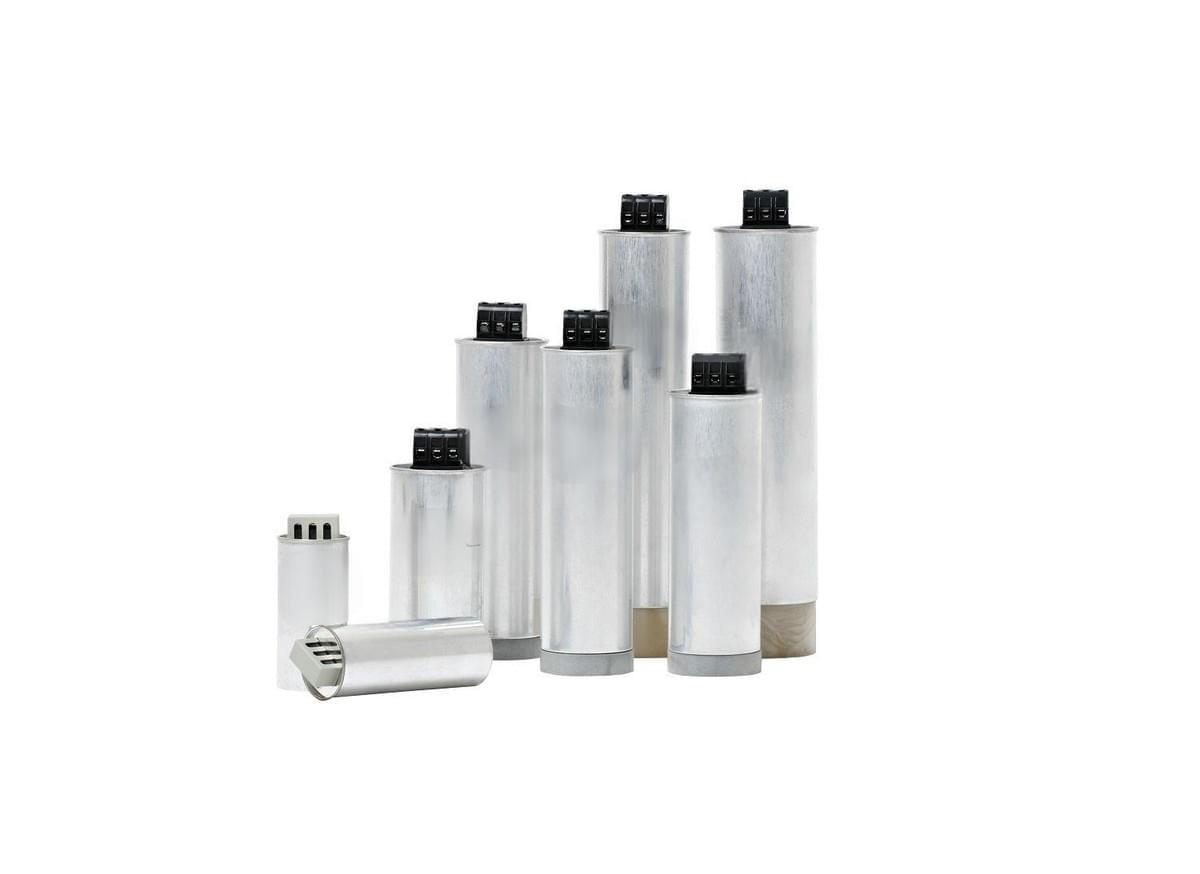
Harmonic Current Injection Leads to Severe Physical Overheating and Dielectric Loss in the Power Capacitor
In modern industrial grids, harmonic currents generated by non-linear loads are superimposed directly onto the fundamental current of the Power Capacitor. Since the physical impedance of a Power Capacitor decreases as frequency increases, high-order harmonics easily surge into the device, producing a Root Mean Square current that is several times the rated value. The Joule heat generated by this current overload causes the dielectric loss of the metallized film to increase sharply, leading to a rapid spike in internal temperature within a short duration. This internal overheating at a physical level is the core incentive for frequent bulging, and if a Series Reactor (Series Reactor) is not configured to provide physical current limiting, the internal elements of the Power Capacitor will undergo physical meltdown.
Frequent Switching Operations Cause Continuous Physical Damage to the Insulation Layers of the Power Capacitor
At the instant a Power Capacitor executes a switching action, it endures an inrush current surge of more than One Hundred Times the rated current. If a Capacitor Duty Contactor (Capacitor Duty Contactor) with current-limiting functions is not utilized, every closing process inflicts microscopic physical punctures on the edge insulation inside the Power Capacitor. As switching cycles accumulate, these tiny physical injuries evolve into localized discharge channels that release massive amounts of thermal energy and gas, rapidly distending the casing and leading to physical bulging. This physical damage triggered by mechanical switching logic is a major reason why a Power Capacitor may experience oil leakage after less than one year of operation.
HertzKron Recommends Eliminating Safety Hazards Through Enhanced Physical Inspections and Hardware Upgrades
Once obvious signs of bulging or oil leakage are detected on-site, a physical disconnection must be executed immediately to replace the Power Capacitor. HertzKron products incorporate a built-in physical explosion-proof structure that automatically disconnects an internal physical breaker when the internal pressure reaches a critical threshold, preventing a violent physical rupture of the casing. By upgrading to a high-grade Power Capacitor that carries CE Certification and employing precise logic control strategies, the physical survival cycle of the equipment can be effectively extended. Within the HertzKron engineering framework, we advocate for the use of metallized films with self-healing properties to build a physical firewall against material failure from the bottom up.
Scientific Configuration of Compensation Components is a Long Term Strategy for Maintaining Power Capacitor Physical Health
The fundamental solution to the problems of Power Capacitor bulging and oil leakage lies in optimizing the physical topology of the entire system. By deploying an SVG (Static Var Generator) at the front end of the system for refined compensation, or by connecting a Series Reactor (Series Reactor) with a tuning factor of Seven Percent to the front of the capacitors, physical erosion caused by harmonics can be effectively eliminated. These systematic physical protection measures not only solve the problem of early Power Capacitor failure but also ensure that the factory distribution room remains in a physically safe and energy-efficient operating state.