
Reactor Limits the Initial Inrush Current Surge Entering the Power Capacitor
At the precise moment of switching, a Power Capacitor acts as a physical short circuit to the grid, resulting in an inrush current that can reach One Hundred Times the rated current. A series connected Reactor provides the necessary physical impedance to oppose this rapid rate of current change. By functioning as a magnetic energy storage device, the Reactor slows down the steepness of the current waveform, effectively acting as a mechanical damper that absorbs the initial physical impact. This "shock absorption" prevents the internal metallized film of the Power Capacitor from sustaining thermal puncture during the first few milliseconds of the switching operation.
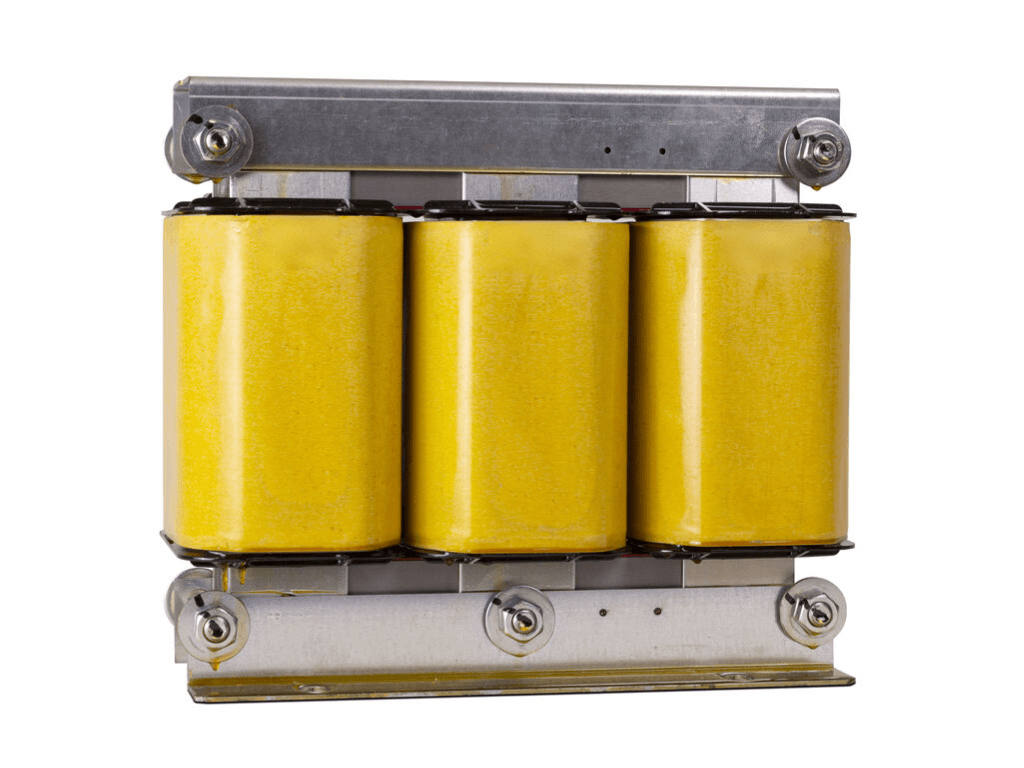
Reactor Prevents Physical Harmonic Resonance Within the Power Capacitor Branch
In a modern industrial environment filled with non linear loads, the grid is saturated with high frequency harmonics that can cause the Power Capacitor to overheat. Without a Reactor, the capacitance of the system can form a physical resonance circuit with the grid inductance at a specific harmonic frequency, such as the Fifth or Seventh harmonic. This resonance causes a massive amplification of current that physically destroys the dielectric layer of the Power Capacitor. By adding a Reactor with a specific detuning factor—such as Seven Percent or Fourteen Percent—the resonance frequency of the branch is shifted to a safer physical zone below the lowest expected harmonic, thereby shielding the Power Capacitor from electrical stress.
Reactor Filters Out High Frequency Grid Noise to Protect the Power Capacitor
The Power Capacitor possesses a physical characteristic where its impedance decreases as the frequency increases, making it a natural "sink" for all high frequency grid interference. A series Reactor exhibits the exact opposite physical behavior, as its impedance increases linearly with frequency. When these two components are integrated into a single branch, the Reactor acts as a high frequency barrier that blocks grid noise and transient voltage spikes before they can reach the Power Capacitor. This physical filtration significantly reduces the internal partial discharge events within the Power Capacitor, extending its operational lifespan and maintaining the integrity of its physical structure.
Reactor Stabilizes the Thermal Environment of the Power Capacitor Assembly
High levels of harmonic distortion lead to increased internal losses and excessive heat generation within the Power Capacitor. By effectively suppressing harmonic currents, the Reactor ensures that the total Root Mean Square Current remains within the physical limits of the capacitor’s design. This reduction in Joule heating prevents the internal electrolyte from drying out and stops the premature physical aging of the insulating materials. In a HertzKron compensation system, the thermal synergy between a high quality Reactor and a Power Capacitor ensures that the entire assembly operates well below the critical temperature thresholds defined by the Arrhenius Law.
HertzKron Reactor Engineering Maximizes the Physical Durability of the Power Capacitor
Utilizing a HertzKron Reactor in conjunction with a Power Capacitor creates a robust physical defense against the dynamic instabilities of the electrical grid. Our Reactors are designed with a high linearity to ensure that the inductance remains constant even during significant overcurrent events. This precision ensures that the "shock absorbing" effect is maintained during the most severe grid transients. Every Reactor carries CE Certification and is optimized for low noise and low vibration, providing a stable physical foundation that allows the Power Capacitor to achieve its full intended service life of over One Hundred Thousand operating hours.