
Shunt Capacitor Provides Local Reactive Power Support to Stabilize System Voltage
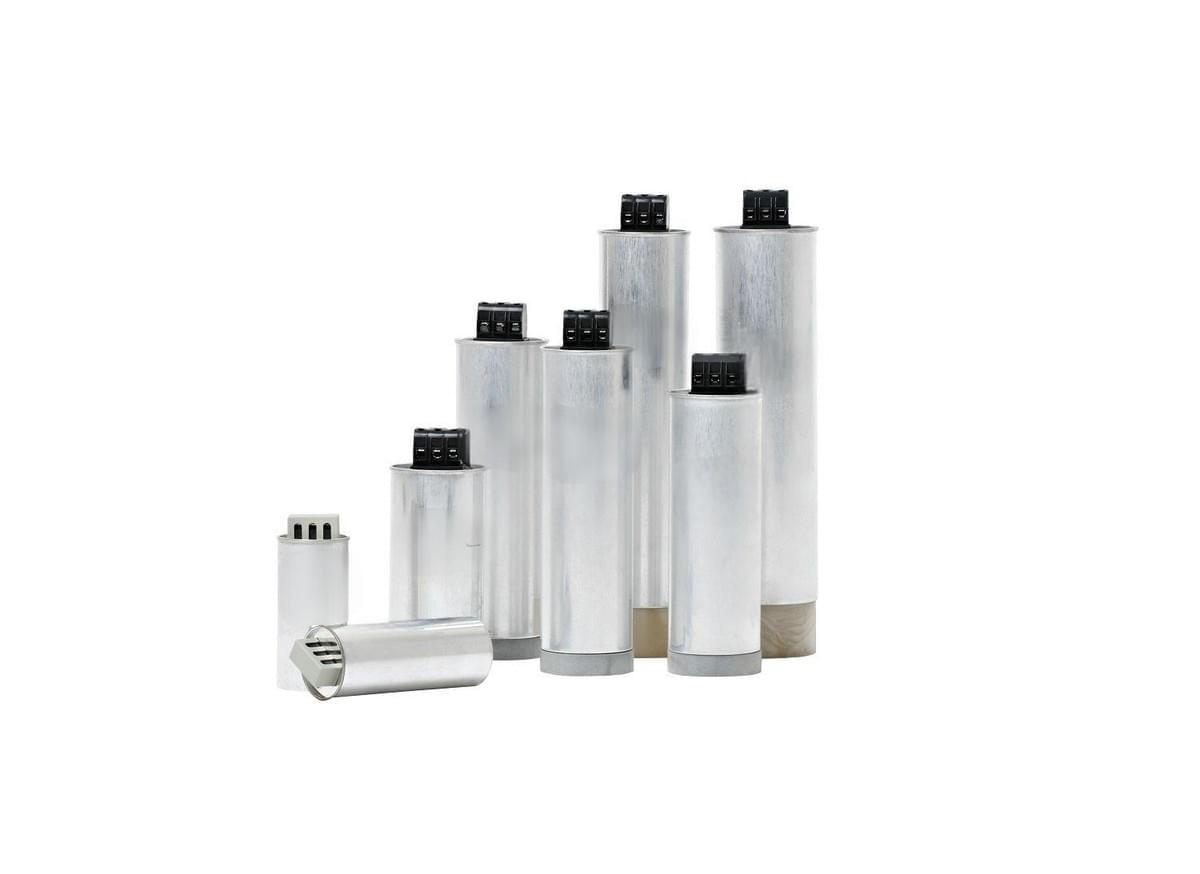
The primary physical role of the Shunt Capacitor (Shunt Capacitor) is to act as a local source of reactive power by being connected in parallel between the phase conductor and the ground. By injecting capacitive reactive current that is exactly opposite to the inductive load current, the Shunt Capacitor (Shunt Capacitor) reduces the total current flowing through the upstream transformer and transmission lines. This physical compensation minimizes the voltage drop across the system impedance and significantly improves the Power Factor. In the HertzKron power quality framework, the Shunt Capacitor (Shunt Capacitor) is the fundamental tool for reducing energy losses and increasing the active power capacity of the existing physical infrastructure.
Series Capacitor Reduces the Physical Impedance of Long Distance Transmission Lines
Unlike parallel devices, the Series Capacitor (Series Capacitor) is inserted directly into the high voltage transmission line to physically counteract a portion of the line’s inductive reactance. By reducing the total series impedance, the Series Capacitor (Series Capacitor) increases the power transfer capability of the circuit and improves the transient stability of the grid. The physical logic here is centered on the voltage boost that is proportional to the line current, which allows for a more efficient distribution of power over hundreds of kilometers. The Series Capacitor (Series Capacitor) is therefore an essential component for optimizing the load sharing between parallel transmission paths in a synchronized power network.
Coupling Capacitor Enables High Frequency Signal Transmission Over High Voltage Lines
The Coupling Capacitor (Coupling Capacitor) functions as a critical interface between high voltage power circuits and low voltage communication or measurement equipment. Its physical design allows it to present a high impedance to the Fifty Hertz or Sixty Hertz power frequency while providing a low impedance path for high frequency carrier signals used in Power Line Carrier communications. Furthermore, the Coupling Capacitor (Coupling Capacitor) serves as the physical sensing element for Capacitor Voltage Transformers, allowing for the safe and accurate measurement of primary grid voltages. This physical duality ensures that the Coupling Capacitor (Coupling Capacitor) can extract data and timing signals without compromising the insulation integrity of the high voltage system.
Internal Physical Structures Differ Significantly Between Shunt Capacitor and Series Capacitor
The dielectric stress and thermal management requirements create distinct physical design paths for each type of device. A Shunt Capacitor (Shunt Capacitor) is designed to withstand a continuous constant voltage and must manage the heat generated by the total reactive current flowing to the ground. In contrast, a Series Capacitor (Series Capacitor) must be engineered to handle the full line current and the intense physical forces associated with system short circuit faults. Because the Series Capacitor (Series Capacitor) is subject to high transient overvoltages across its terminals during a fault, it requires specialized physical protection bypass systems, such as metal oxide varistors, which are not typically required for a standard Shunt Capacitor (Shunt Capacitor).
HertzKron Engineering Ensures High Reliability for Shunt Capacitor and Coupling Capacitor Applications
Whether it is for reactive power correction or high frequency signal coupling, HertzKron focuses on the long term physical stability of the dielectric materials. Our Shunt Capacitor (Shunt Capacitor) units utilize a high purity metallized film with advanced self healing properties to ensure a service life exceeding One Hundred Thousand operating hours. Similarly, our specialized capacitors used in coupling applications are designed with low partial discharge characteristics to ensure the clarity of carrier signals. Every Shunt Capacitor (Shunt Capacitor) and Coupling Capacitor (Coupling Capacitor) carries CE Certification, providing a robust physical guarantee for the safety and efficiency of modern electrical power and communication networks.