
In modern power systems and industrial production systems, power quality has become a core indicator for measuring production stability, power supply reliability, and energy consumption economy. With the extensive access of a large number of non‑linear loads, impact loads, and new energy power generation equipment, both the grid and the user side are facing a series of problems such as low power factor, voltage fluctuations, harmonic pollution, and three‑phase imbalance. Against this background, SVG (Static Var Generator) has become the mainstream solution in power quality management and reactive power compensation due to its excellent performance. However, in practical applications, many electrical technicians, enterprise managers, and procurement personnel still have a superficial understanding of SVG (Static Var Generator), and cannot grasp its working principle, technical advantages, application value, and selection logic. To help more people systematically, deeply, and comprehensively master the knowledge related to SVG (Static Var Generator), this article will elaborate on the definition, working principle, core structure, technical advantages, comparison with traditional equipment, industry applications, economic benefits, selection methods, and development trends, leading you to truly understand SVG (Static Var Generator).
1. Basic Definition and Industry Positioning of SVG (Static Var Generator)
SVG (Static Var Generator) is the English abbreviation of Static Var Generator. It is also known as STATCOM, or Static Synchronous Compensator, in academic and power grid fields. It is an active power quality management device based on fully‑controlled power electronic conversion technology, with IGBT as the core switching device, connected to the grid in parallel. It can quickly, continuously, and bidirectionally regulate reactive power, and also has the functions of suppressing harmonics, stabilizing voltage, and improving three‑phase imbalance.
From the perspective of technological generations, SVG (Static Var Generator) belongs to the third‑generation reactive power compensation technology. The first generation is represented by synchronous condensers, which provide reactive power through mechanical rotating equipment, with large volume, slow response, and complex maintenance. The second generation is represented by thyristor‑switched capacitors, thyristor‑controlled reactors (TCR), SVC, and other equipment, which belong to semi‑controlled power electronic devices. Although they achieve non‑mechanical contact switching, their adjustment range is limited, response speed is slow, and they are prone to generate harmonics and resonance problems. The third generation is fully‑controlled equipment represented by SVG (Static Var Generator). Relying on modern power electronic technology, digital control technology, and PWM pulse width modulation technology, it achieves precise, fast, and intelligent regulation of reactive power, representing the highest technical level in the current reactive power compensation field.
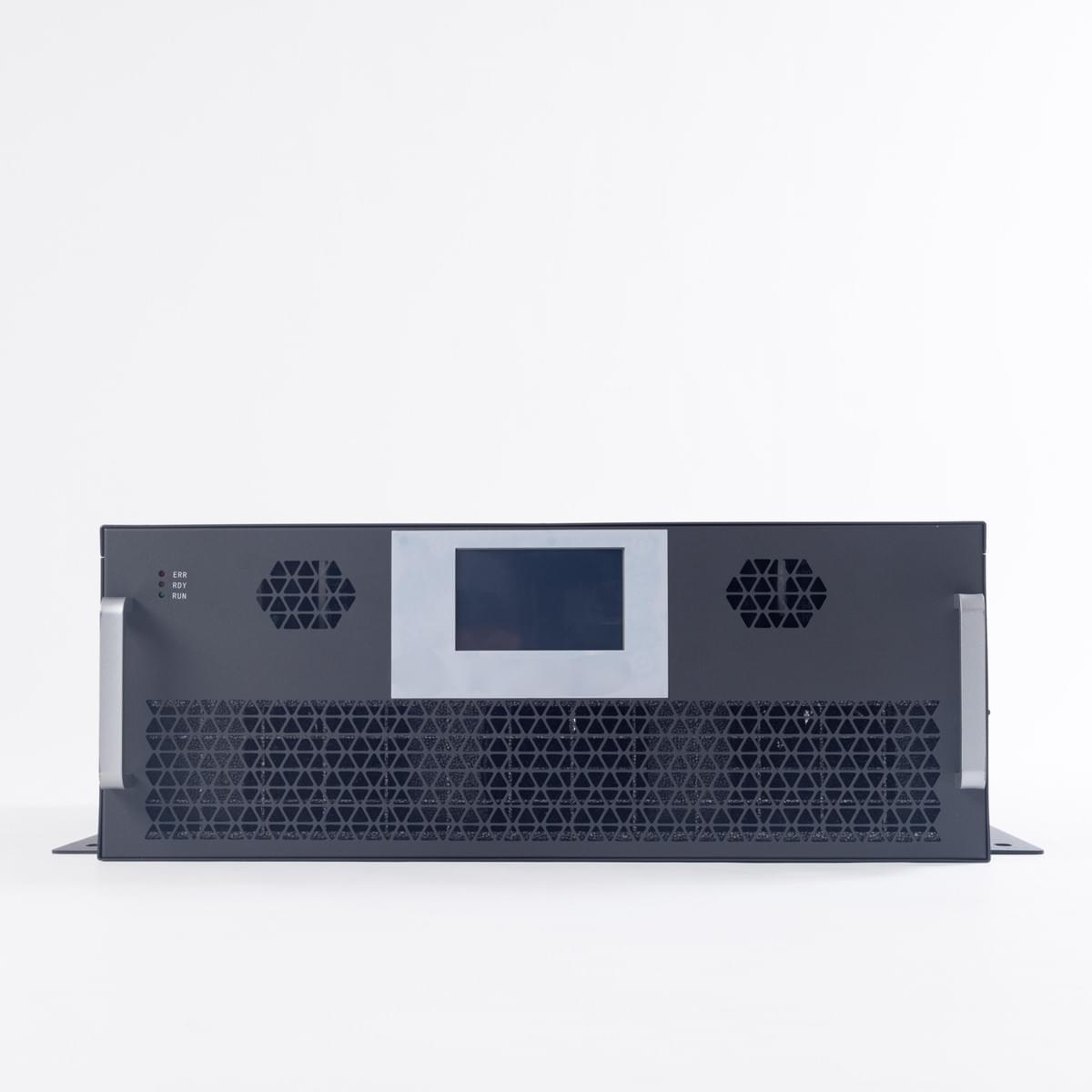
Simply put, the core function of SVG (Static Var Generator) is to maintain the reactive power balance in the power grid and power distribution system, improve voltage quality, reduce line loss, improve power supply efficiency, and ensure the safe and stable operation of various electrical equipment. It is no longer a simple compensation device, but an indispensable regulating device in modern power systems, widely used in industrial enterprises, new energy power generation, rail transit, data centers, power transmission and distribution, and other scenarios.
2. In‑Depth Analysis of the Working Principle of SVG (Static Var Generator)
The working principle of SVG (Static Var Generator) is based on power electronic conversion technology, automatic control theory, and grid reactive power regulation theory. Many non‑professional technicians find it difficult to understand. This article will disassemble it layer by layer from basic logic to professional principles, so that readers with different knowledge backgrounds can master it.
First, we need to clarify the difference between active power and reactive power in the power grid. Active power is the power directly used for equipment to do work, converted into mechanical energy, thermal energy, light energy, and other forms, which is the actual effective electric energy consumed by enterprises. Reactive power does not do work directly; it is mainly used to establish a magnetic field and maintain the normal operation of electrical equipment, which is an essential part of inductive equipment such as motors, transformers, and reactors. Too much or too little reactive power will lead to problems such as low power factor, voltage fluctuations, increased line loss, and equipment heating. The core task of SVG (Static Var Generator) is to regulate the reactive power in the system in real time to keep it balanced.
SVG (Static Var Generator) adopts a voltage‑source converter topology, which is mainly composed of DC‑side capacitors, IGBT power modules, reactors, control systems, and other components. Its basic working logic is: collect voltage and current signals on the grid side in real time through high‑precision sampling units, convert analog signals into digital signals and send them to high‑speed DSP controllers. The controller accurately tracks the grid phase through phase‑locked loop technology, quickly calculates the reactive power, harmonic components, unbalance, and other parameters required by the current grid, then sends PWM drive signals to control the IGBT power modules to turn on and off in the specified frequency and order, and invert the DC electric energy stored in the DC‑side capacitors into AC voltage with the same frequency as the grid and adjustable phase.

When the power grid system is inductive and lacks capacitive reactive power, SVG (Static Var Generator) adjusts the amplitude of the output voltage to be higher than the grid voltage. At this time, SVG (Static Var Generator) sends capacitive reactive power to the grid to compensate for the reactive power gap of the system and improve the power factor. When the power grid system is capacitive and reactive power is excessive, SVG (Static Var Generator) adjusts the amplitude of the output voltage to be lower than the grid voltage, absorbs inductive reactive power from the grid, and avoids over‑compensation problems. The whole adjustment process is continuous and smooth, without step‑by‑step jumping, and can be adjusted steplessly from full inductive to full capacitive. The response time can be controlled within 5 ms, which is far better than traditional reactive power compensation equipment.
Different from traditional equipment such as SVC, SVG (Static Var Generator) exhibits current‑source characteristics, and its reactive power output capability is minimally affected by grid voltage. Even if the grid voltage drops sharply, SVG (Static Var Generator) can still maintain the rated reactive power output and provide strong support for the grid. This characteristic makes it irreplaceable in new energy grid‑connected and impact load scenarios.
3. Core Structure and Components of SVG (Static Var Generator)
A complete industrial‑grade SVG (Static Var Generator) works collaboratively with multiple functional modules. The structure is rigorous and scientific, and different modules undertake different functions to jointly ensure the stable operation of the equipment. Its core structure is mainly divided into four modules: power module, control module, filtering and connection module, cabinet and auxiliary system.
The power module is the core execution unit of SVG (Static Var Generator), equivalent to the heart of SVG (Static Var Generator). This module is mainly composed of IGBT power devices, drive circuits, DC support capacitors, absorption circuits, and so on. IGBT, or Insulated Gate Bipolar Transistor, is a fully‑controlled power electronic switch with high switching frequency, low conduction loss, and high reliability. It can quickly turn on and off at high frequency, which is the basis for reactive power regulation. The drive circuit is responsible for amplifying the weak current signal sent by the controller, driving the IGBT to work normally, and has isolation protection function to prevent strong current from interfering with the weak current control system. The DC support capacitor is used to stabilize the DC‑side voltage, store energy, provide energy support for the inverter process, and ensure the stable output of SVG (Static Var Generator).
The control module is the brain of SVG (Static Var Generator), which determines the response speed, compensation accuracy, and operational reliability of the equipment. This module takes high‑speed digital signal processor (DSP) as the core, cooperates with FPGA (Field Programmable Gate Array), to realize high‑speed signal collection, calculation, and instruction output. The control module includes voltage and current sampling circuits, phase‑locked loop circuits, protection signal collection circuits, etc., which can capture the grid status in real time and execute algorithms such as reactive power regulation, harmonic suppression, and three‑phase imbalance compensation. At the same time, the control module has complete protection logic, which can realize over‑voltage, under‑voltage, over‑current, over‑heating, phase loss, short‑circuit, lightning protection, and other protection functions. Once an abnormality is detected, it immediately sends an instruction to stop the equipment operation to ensure the safety of the equipment and the power grid.
The filtering and connection module mainly includes connecting reactors, filtering circuits, isolation transformers, and other parts. The function of the connecting reactor is to buffer the energy exchange between SVG (Static Var Generator) and the power grid, filter out high‑frequency harmonics generated during the IGBT switching process, smooth the output current, and avoid impact on the power grid. For medium and high‑voltage SVG (Static Var Generator), isolation transformers are usually configured to realize electrical isolation between the high‑voltage side and the low‑voltage side, improve equipment safety, and adapt to grid access of different voltage levels.
The cabinet and auxiliary system is the guarantee for the stable operation of SVG (Static Var Generator), including cabinet structure, cooling system, circuit breakers, contactors, human‑computer interaction interface, communication interface, etc. Industrial‑grade SVG (Static Var Generator) usually adopts a modular cabinet design, which is convenient for installation, maintenance, and capacity expansion. The cooling system mostly adopts forced air cooling or water cooling to ensure that core devices such as IGBTs work within an appropriate temperature range and extend the service life of the equipment. The human‑computer interaction interface can display equipment operating parameters, grid status, fault information, etc. in real time, which is convenient for operators to monitor and debug. The communication interface supports RS485, Ethernet, CAN, and other communication methods, which can be connected to the enterprise power distribution room monitoring system or power grid dispatching platform to realize remote monitoring and management.
4. Core Technical Advantages of SVG (Static Var Generator)
Compared with traditional capacitor compensation cabinets, SVC, and other reactive power compensation equipment, SVG (Static Var Generator) has comprehensive advantages in technical performance, operational stability, application scenarios, and economic benefits. These advantages are also the core reasons for its rapid popularization.
SVG (Static Var Generator) has an extremely fast response speed and can perfectly adapt to impact loads. In metallurgy, mining, port, and other industries, equipment such as electric arc furnaces, rolling mills, cranes, and gantry cranes are impact loads with extremely fast load changes, which will lead to sharp voltage fluctuations and flicker, affecting the normal operation of surrounding equipment. The response time of traditional capacitor cabinets is hundreds of milliseconds, and the response time of SVC is more than 20 ms, which cannot keep up with the load change speed. The response time of SVG (Static Var Generator) is ≤5 ms, which can complete reactive power regulation instantly when the load fluctuates, effectively suppress voltage flicker, and ensure continuous and stable production.
SVG (Static Var Generator) realizes bidirectional continuous stepless adjustment with high compensation accuracy. Traditional capacitor cabinets can only switch in stages, only send capacitive reactive power, cannot absorb reactive power, and are prone to under‑compensation or over‑compensation problems. SVC has a limited adjustment range and cannot achieve full‑range smooth adjustment. SVG (Static Var Generator) can continuously adjust between inductive and capacitive, with linear change of reactive power output and no step difference. It can stably control the power factor above 0.99 to meet the strict assessment requirements of the power grid.
SVG (Static Var Generator) has a strong low‑voltage reactive power output capability and extremely strong grid adaptability. The output capacity of traditional reactive power compensation equipment is proportional to the square of the grid voltage. When the grid voltage drops, the compensation capacity drops sharply. SVG (Static Var Generator) has current‑source characteristics. Even if the grid voltage drops to 20% of the rated voltage, it can still output rated reactive power to provide voltage support for the grid, which is especially suitable for voltage unstable scenarios such as new energy power stations and remote power grids.
SVG (Static Var Generator) can realize reactive power compensation, harmonic suppression, and three‑phase imbalance management at the same time, serving multiple purposes. Traditional capacitor cabinets cannot manage harmonics, but may resonate with grid impedance, amplify harmonics, and damage equipment. SVC has poor harmonic suppression ability. High‑quality SVG (Static Var Generator) can effectively filter out the main harmonic components such as the 5th, 7th, 11th, and 13th harmonics in the power grid while compensating reactive power, reduce the harmonic distortion rate, improve the three‑phase imbalance problem, reduce neutral line current, reduce equipment heating and loss, and save enterprises the cost of purchasing harmonic management equipment separately.
SVG (Static Var Generator) covers a small area and is flexible and convenient to install. Under the same compensation capacity, the volume of SVG (Static Var Generator) is only 1/3 to 1/2 of that of traditional SVC and 1/2 of that of capacitor compensation cabinets. The modular design allows it to be directly installed in the existing power distribution room without large‑scale renovation, which is especially suitable for the upgrading and renovation of old factories and space‑tight scenarios.
SVG (Static Var Generator) has low operating loss, long service life, and extremely low maintenance cost. The internal capacitor components of traditional capacitor cabinets are prone to aging and bulging and need to be replaced regularly. Mechanical switches produce impact when switching, with a high failure rate. SVC has high operating loss, complex structure, and difficult maintenance. SVG (Static Var Generator) has no mechanical moving parts and no wearing parts. Core devices such as IGBTs have a service life of more than 10 years. The equipment operating loss is much lower than that of traditional equipment. It can operate fully automatically after power‑on, almost without daily maintenance, greatly reducing the long‑term operating costs of enterprises.
5. Comparison Between SVG (Static Var Generator) and Traditional Reactive Power Compensation Equipment
In the actual selection process, many users cannot distinguish the differences between SVG (Static Var Generator), traditional capacitor cabinets, and SVC, and are prone to selection errors. Through a comprehensive comparison, the advantages, disadvantages, and applicable scenarios of different equipment can be clearly seen.
The traditional capacitor compensation cabinet is the most widely used basic compensation equipment, which provides capacitive reactive power by switching capacitor groups through AC contactors or thyristors. Its advantages are low cost, simple structure, and convenient installation. The disadvantages are obvious: slow response speed, step adjustment, low compensation accuracy, inability to absorb reactive power, easy amplification of harmonics, resonance, large floor area, and frequent maintenance. It is only suitable for small scenarios with stable load, no harmonics, and no impact load.
SVC (Static Var Compensator) takes thyristor as the core switching device, composed of TCR and FC, belonging to semi‑controlled equipment. Compared with capacitor cabinets, SVC realizes non‑mechanical contact adjustment, and the response speed is improved, with continuous adjustment. However, the disadvantages are still prominent: limited adjustment range, harmonic generation, poor low‑voltage output capacity, large floor area, high operating loss, and cannot meet the high‑precision and high‑stability power quality management requirements.
As the third‑generation technology, SVG (Static Var Generator) surpasses the first two generations comprehensively, with fully‑controlled, bidirectional adjustment, millisecond‑level response, full low‑voltage output, harmonic suppression, no resonance, small size, low loss, low maintenance, and other advantages. It is suitable for all industrial scenarios, new energy scenarios, and power grid scenarios. Although the initial investment is slightly higher, the comprehensive cost‑performance ratio is much higher than that of traditional equipment. Long‑term use can greatly save electricity and maintenance costs.
Through comparison, we can draw a conclusion: capacitor cabinets can be used temporarily for small, stable load, no harmonic, and extremely low budget scenarios; for scenarios with certain requirements for power quality but small load fluctuations, SVC can be gradually eliminated; for scenarios pursuing stable production, reducing electricity costs, meeting grid assessment, and long‑term stable operation, SVG (Static Var Generator) is the only optimal choice.
6. Industry Application Scenarios of SVG (Static Var Generator)
The application scenarios of SVG (Static Var Generator) cover all fields with power quality problems. With industrial upgrading and the development of new energy, its application scope is still expanding. The following are the specific applications of core industries.
In the field of industrial enterprises, SVG (Static Var Generator) is the most widely used. Equipment such as electric arc furnaces, continuous casting machines, and rolling mills in the metallurgical industry have great load impact, serious harmonics, and frequent voltage flicker. Installing SVG (Static Var Generator) can quickly stabilize voltage, suppress harmonics, improve product qualification rate, and reduce downtime loss. Equipment such as hoists, crushers, fans, and water pumps in the mining industry have large inductive loads and low power factor. SVG (Static Var Generator) can improve the power factor, avoid power factor penalty, and reduce transformer loss. Compressors and frequency conversion equipment in the chemical industry, welding machines, punching machines, injection molding machines, etc. in the manufacturing industry all have non‑linear loads. SVG (Static Var Generator) can effectively improve power quality and ensure the stable operation of equipment.
In the field of new energy power generation, SVG (Static Var Generator) is essential equipment. The output power of photovoltaic power stations and wind farms is greatly affected by light and wind, leading to unstable grid voltage, excessive harmonics, and failure to meet grid connection requirements. SVG (Static Var Generator) can quickly stabilize power fluctuations, stabilize voltage at grid connection points, filter harmonics, improve the utilization rate of new energy power generation, and help power stations pass grid acceptance and assessment smoothly.
In the field of rail transit, the traction load of high‑speed railways and subways is single‑phase impact load, which will cause problems such as three‑phase imbalance, voltage fluctuations, and harmonic pollution in the power grid. SVG (Static Var Generator) can effectively manage three‑phase imbalance, suppress harmonics, stabilize the voltage of the traction power supply system, reduce line loss, and ensure the safe and reliable operation of rail transit.
In the field of data centers and commercial buildings, a large number of UPS power supplies, servers, air conditioning equipment inside data centers, elevators, central air conditioners, lighting equipment inside commercial buildings are all non‑linear loads with low power factor. SVG (Static Var Generator) can improve the power factor, reduce transformer and line loss, avoid electricity penalty, and ensure stable power supply to prevent equipment power failure.
In power transmission and distribution systems, SVG (Static Var Generator) can be used for the upgrading and transformation of substations and distribution networks to improve grid voltage stability, improve transmission efficiency, reduce grid loss, enhance the anti‑disturbance ability of the grid, and ensure regional power supply reliability. In addition, SVG (Static Var Generator) also plays an important role in ports, docks, oil fields, hospitals, and other scenarios, providing guarantee for production and domestic electricity.
7. Economic Benefits and Social Value Brought by SVG (Static Var Generator)
Many enterprises only focus on the initial procurement cost when purchasing SVG (Static Var Generator), ignoring the huge long‑term economic benefits it brings. In fact, the investment payback period of SVG (Static Var Generator) is short, and the comprehensive income far exceeds the equipment investment.
SVG (Static Var Generator) can help enterprises avoid power factor penalty and directly reduce electricity expenditure. The power supply department has strict assessment standards for enterprise power factor, generally requiring it to reach more than 0.9. Below the standard, penalties will be imposed, and rewards will be given if it is higher than the standard. After installing SVG (Static Var Generator), the power factor can be stably above 0.99, which not only avoids penalties but also obtains electricity rewards, saving 5% to 15% of monthly electricity expenditure.
SVG (Static Var Generator) can reduce transformer and line loss and achieve energy saving and consumption reduction. After reactive power balance, the line current decreases, the heating loss of transformers and cables is reduced, and the line loss can be reduced by 3% to 10%. For large industrial enterprises and high‑energy‑consuming enterprises, tens of thousands or even hundreds of thousands of yuan can be saved in electricity costs a year. At the same time, the transformer can achieve capacity expansion effect without advance investment in capacity increase, saving large fixed asset investment.
SVG (Static Var Generator) can reduce equipment failure and production downtime loss and ensure production continuity. After voltage stabilization and harmonic elimination, motors, frequency converters, PLC, precision instruments, and other equipment operate more stably, avoiding downtime, increased defective rate, equipment burnout, and other problems caused by voltage flicker. For continuous production enterprises, one downtime loss may be as high as hundreds of thousands of yuan. SVG (Static Var Generator) can effectively avoid such risks.
SVG (Static Var Generator) can help enterprises pass grid power quality assessment and reduce compliance costs. New energy power stations and large industrial enterprises must meet the assessment indicators of grid harmonics, voltage fluctuations, power factor, etc., otherwise they will be subject to power rationing and fines. SVG (Static Var Generator) is the core equipment to meet compliance requirements.
From the perspective of social value, the wide application of SVG (Static Var Generator) can improve the operation efficiency of the entire power system, reduce grid loss, reduce energy waste, and help achieve the dual‑carbon goal. At the same time, SVG (Static Var Generator) can improve power supply reliability, ensure industrial production and domestic electricity stability, and promote high‑quality industrial development.
8. Selection Methods and Precautions for SVG (Static Var Generator)
Correct selection is the key to ensuring that SVG (Static Var Generator) works. Many enterprises have poor compensation effect, equipment waste, or failure to meet demand due to improper selection. During selection, we need to focus on factors such as compensation capacity, voltage level, on‑site load characteristics, and manufacturer strength.
Determining the compensation capacity is the first step in selection. The compensation capacity needs to be accurately calculated according to parameters such as transformer capacity, on‑site load characteristics, target power factor, and harmonic content, and cannot be selected blindly. If the capacity is too small, the compensation will not meet the standard and cannot solve the problem; if the capacity is too large, the initial investment cost will be increased. Generally, the capacity of SVG (Static Var Generator) can be selected according to 20% to 40% of the transformer capacity. For scenarios with impact loads and serious harmonics, the capacity needs to be appropriately increased.
Determine the voltage level to match the on‑site power grid. Low‑voltage SVG (Static Var Generator) is mainly 400V and 690V, suitable for ordinary industrial enterprises, commercial buildings, and small power distribution rooms. Medium‑voltage SVG (Static Var Generator) is mainly 10kV and 35kV, suitable for large industrial enterprises, new energy power stations, substations, and other scenarios. The selection must be consistent with the on‑site voltage level to avoid grid connection failure.
Select the function type according to on‑site problems. If there is only a low power factor problem on site, the standard SVG (Static Var Generator) can be selected. If the on‑site harmonic content is high and the three‑phase imbalance is serious, it is necessary to select SVG (Static Var Generator) + APF integrated equipment to realize reactive power compensation, harmonic management, and imbalance adjustment at the same time. For impact load scenarios, focus on the response speed and select high‑speed SVG (Static Var Generator) ≤5 ms.
Choosing a reliable manufacturer is crucial. High‑quality manufacturers have core technology R&D capabilities, complete production technology, reliable component procurement channels, and complete warranty and after‑sales service systems. During selection, we need to investigate the manufacturer’s technical patents, successful cases, warranty period, and after‑sales response speed, and avoid choosing small manufacturers without technology and after‑sales to prevent unsolvable failures in the later stage.
9. Technical Development Trend of SVG (Static Var Generator)
With the rapid development of power electronic technology, digital control technology, and new energy industry, SVG (Static Var Generator) technology is also constantly upgrading and iterating. In the future, it will show the trends of high‑voltage and large‑capacity, modularization, intelligence, and digitization.
High‑voltage and large‑capacity is the development direction of power grid and large industrial scenarios. To meet the needs of UHV power grids, large new energy bases, and high‑energy‑consuming industrial enterprises, the voltage level of SVG (Static Var Generator) will continue to increase, and the single capacity will continue to increase, reducing the number of equipment in parallel, simplifying the system structure, and improving operation stability.
Modular and miniaturization has become the mainstream of product design. Modular SVG (Static Var Generator) has the advantages of fast installation, convenient maintenance, and flexible capacity expansion. It is smaller in size and lighter in weight, can realize plug‑and‑play, apply to more scenarios, and reduce installation and transformation difficulty.
Intelligence and digitization are important development directions of SVG (Static Var Generator). In the future, SVG (Static Var Generator) will integrate the Internet of Things, big data, and artificial intelligence technologies, with self‑diagnosis, self‑repair, and adaptive adjustment capabilities. It can analyze the grid status in real time, automatically optimize operation strategies, realize remote monitoring, fault early warning, and cloud debugging, without manual on‑site operation, and improve equipment operation and management efficiency.
At the same time, SVG (Static Var Generator) will be integrated with energy storage, new energy converters, and other equipment to form multi‑functional integrated power quality management equipment, realizing multiple functions such as reactive power compensation, harmonic management, energy storage, and power regulation, to better adapt to the needs of new power systems.
10. Summary
SVG (Static Var Generator) is the most advanced, reliable, and widely used reactive power compensation and power quality management equipment in the current power system. Relying on fully‑controlled power electronic technology and digital control technology, it solves a series of problems of traditional equipment such as slow response, poor adjustment, large harmonics, and difficult maintenance, becoming the core equipment for industrial upgrading, new energy development, and power grid transformation.
From the perspective of working principle, SVG (Static Var Generator) realizes bidirectional and continuous adjustment of reactive power through real‑time detection, rapid calculation, and precise inversion to maintain grid balance. From the perspective of structure, the modular design makes it stable, reliable, and easy to maintain. From the perspective of advantages, millisecond‑level response, full low‑voltage output, multi‑purpose, low loss and other characteristics surpass traditional equipment comprehensively. From the perspective of application, it covers all industry scenarios and brings significant economic benefits to enterprises. From the perspective of trend, high voltage, intelligence, and modularization will become the future development direction.
For electrical technicians, mastering the principle and application of SVG (Static Var Generator) is a necessary skill. For enterprise managers, understanding the value of SVG (Static Var Generator) is an important way to reduce costs and increase efficiency. For procurement personnel, learning to select SVG (Static Var Generator) is a key link to ensure production stability. Today, when power quality is receiving more and more attention, SVG (Static Var Generator) is no longer an optional equipment, but a necessary equipment to ensure electricity safety, reduce electricity costs, and meet grid assessment.
In the future, with the construction of a new power system and the in‑depth promotion of the dual‑carbon goal, the application of SVG (Static Var Generator) will become more popular, and the technology will be more mature, becoming an important support to promote the high‑quality development of the power industry. Only by truly understanding SVG (Static Var Generator) can we maximize its value in practical applications and create more benefits for enterprises and society.