
Distributed PV self-consumption has already become a mainstream solution for commercial and industrial enterprises to save energy and reduce costs. However, after a large number of enterprises implement it, they fall into a common confusion: they install PV in the same way, but the power factor adjustment electricity fees on their electricity bills show three completely different results:
- Before grid connection, there are no power factor deductions at all every month, but after PV grid connection, high fines are continuously generated;
- Regardless of whether there is PV grid connection, power factor adjustment fee deductions stably appear every month;
- A minority of enterprises always have up-to-standard power factors before and after grid connection, with zero additional power factor expenditures throughout.
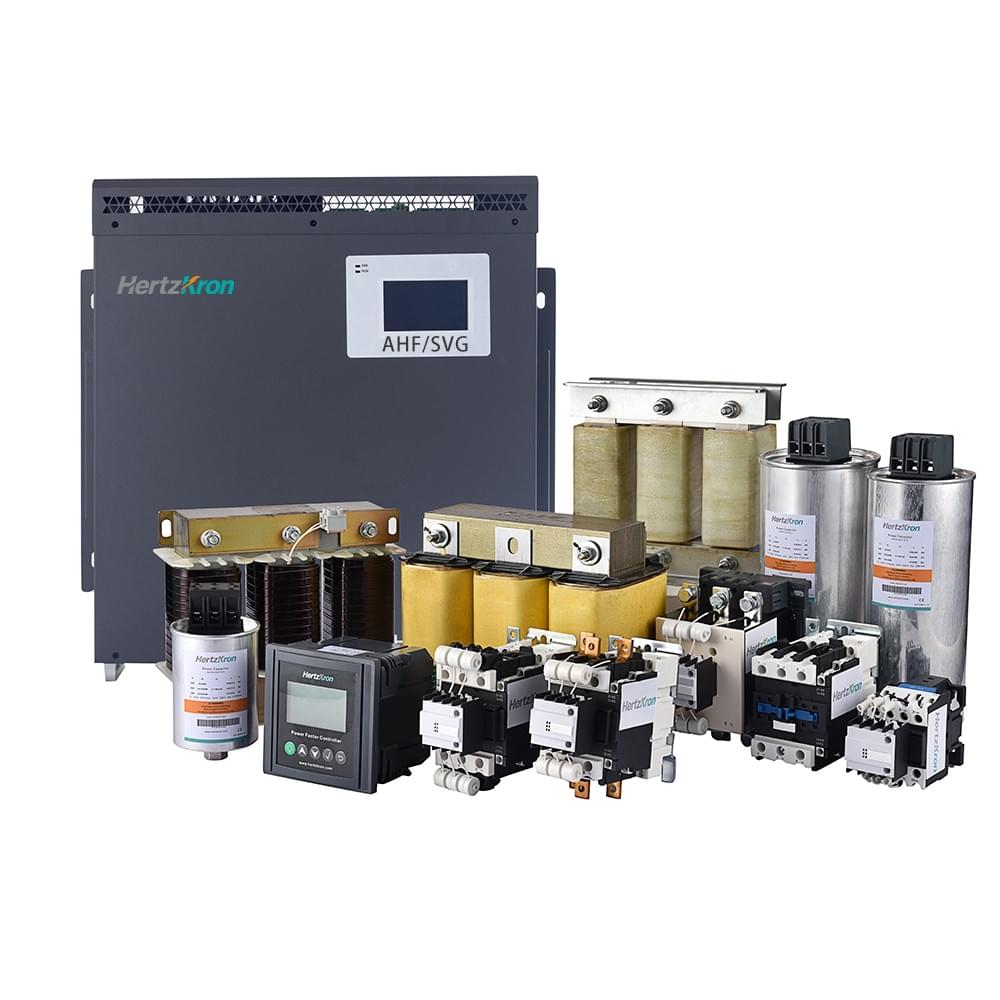
Many factory electricians and enterprise leaders cannot distinguish the underlying logic behind this, simply believing that "PV itself harms the power factor." Blindly adding capacitor cabinets instead leads to over-compensation and frequent switching and damage of equipment. Combining grid metering rules and reactive power balance principles, this article analyzes the causes by scenario, benchmarks against typical working conditions of enterprises, and provides compliant and practical reactive power compensation optimization solutions, which are suitable for factory owners, electrical O&M personnel, and PV engineering practitioners to bookmark and forward.
I. Basic Science Popularization: First Understand the Core Rules of Power Factor Adjustment Charges
1. What is the Power Factor Adjustment Charge?For example, in China, according to the national "Measures for Power Factor Adjustment of Electricity Fees," for industrial and commercial high-voltage users with a capacity of 100 kVA and above, the power supply enterprise assesses the weighted average power factor at the gateway metering point on a monthly basis. The universal industry assessment standard is fixed at 0.9. The assessment results directly determine the addition or subtraction of electricity fees:
- Monthly average power factor greater than or equal to 0.9: Enjoy electricity fee reductions, with zero power factor penalties.
- Monthly average power factor less than 0.9: An adjusted electricity fee (commonly known as a power factor penalty) is charged based on a gradient scale. The lower the power factor value, the higher the percentage of the additional charge.
- Power factor below 0.65: The penalty percentage rises sharply, and a factory's single-month power factor penalty can reach up to tens of thousands of yuan.
Universal Base Formula for Electricity Fees:Total Monthly Electricity Fee equals Basic Electricity Fee plus Active Energy Fee plus or minus Power Factor Adjustment Fee plus Additional Funds
(Key Note: The power factor adjustment fee is a floating variable item, where a positive value equals extra deduction (penalty), and a negative value equals electricity fee reduction.)
2. The Core Key Point of How PV Grid Connection Changes Power Factor AssessmentOrdinary factory power consumption follows a unidirectional utility power supply mode. After a photovoltaic (PV) system is connected to the grid, the gateway electricity meter switches to four-quadrant bidirectional metering, causing a fundamental change in the power bureau's accounting rules. The three types of electricity quantities are defined as follows:
- Forward Active Energy: The active energy that the enterprise draws from the power grid (the sole active energy base used by the power bureau to assess the power factor).
- Reverse Active Energy: The electricity generated in excess by the PV system and sent back to the power grid, which is completely excluded from the active energy base when the power bureau calculates the power factor.
- Reactive Energy: Only statistics on the reactive energy absorbed or sent out by the gateway from the power grid are gathered. PV inverters only output active electrical energy and provide almost no inductive reactive power compensation, while the reactive power losses generated by factory transformers and motors running at no-load or light-load remain fixed.
The Power Bureau's Official Core Formula for Calculating Power Factor:Power Factor equals P divided by the square root of the sum of P squared and Q squared
Formula Annotations:
- P represents: Forward active energy at the power grid gateway.
- Q represents: Cumulative total reactive energy of both forward reactive energy and reverse reactive energy.
- Note: This formula is the sole accounting standard used in the power bureau's backend; there are no alternative statistical methods.
Core Conclusion (Most Important): The smaller the forward active energy, and the larger the cumulative reactive energy of the line, the lower the monthly assessed power factor will be, and the higher the enterprise's power factor penalty will be.
II. In-Depth Dissection of Three Major Application Scenarios (Covering 95% of Industrial and Commercial PV Users)
Scenario 1: No power factor adjustment charges before grid connection, but continuous power factor penalties after PV grid connection.
- Target Group: Factories with stable full-load production, such as mechanical processing, injection molding, textiles, hardware processing, etc., where equipment runs uninterruptedly 24 hours a day or at full load during day shifts.
- The Root Cause of Zero Penalties Before Grid Connection:
- The factory's production load is stable, with motors and transformers continuously consuming a large amount of active electrical energy, ensuring an ample forward active energy base at the total incoming line.
- The original traditional two-quadrant reactive power compensation controller is adapted to unidirectional power consumption conditions. It can accurately switch capacitor banks according to the inductive reactive power demand of the load, offsetting the vast majority of reactive power losses.
- The monthly proportion of active power at the incoming line is much higher than that of reactive power, maintaining the weighted average power factor stably above 0.9, resulting in zero power factor adjustment charges throughout.
- The Underlying Logic of Sudden Penalties After Grid Connection:
- During the day, the PV system generates power for self-consumption, directly offsetting most of the factory's production load. This causes the forward active energy on the power grid side to shrink drastically, while the inherent inductive reactive power losses of the motors and transformers remain virtually unchanged in total.
- Traditional two-quadrant compensation controllers cannot identify the PV reverse power supply condition. After the incoming line current decreases, the controller misjudges that the on-site reactive power demand is insufficient and automatically cuts off the capacitor compensation branches, throwing the factory into a state of severe under-compensation.
- On weekends and holidays when the factory stops operations completely, the PV system runs at no-load: the forward active energy from the grid approaches 0, leaving only the no-load reactive power loss of the transformers. The monthly average power factor drops off a cliff, directly triggering high power factor penalties.
Scenario 2: Stable power factor adjustment charges occurring every month both before and after grid connection.
- Target Group: Small and micro enterprises with insufficient operating rates, intermittent production, and low equipment load rates, such as small processing plants, warehousing centers, building material stores, and intermittent production workshops. These businesses generally suffer from oversized transformer selection and long-term light-load operation.
- The Root Cause of Continuous Penalties Before Grid Connection:
- Transformer capacity selection is heavily redundant, with daily equipment loads remaining under 30% of the transformer's rated capacity, leading to an extremely high proportion of no-load reactive power loss from the transformer.
- The capacity of the original capacitor compensation cabinet can only cover the reactive power of running production equipment, failing to offset the fixed no-load reactive power loss of the transformer.
- The daily forward active energy base from the power grid incoming line is chronically low, while the proportion of reactive power remains high. Even before installing PV, the power factor is perennially below 0.9, resulting in fixed monthly power factor penalties.
- No Improvement or Even Aggravation of Penalties After Grid Connection:
- The PV system further offsets the power load of the plant area, shrinking the forward active energy base on the power grid side once again, while the proportion of reactive power continues to rise.
- Legacy two-quadrant compensation devices lack bidirectional electrical energy identification capabilities. When PV power flows backward, the amount of compensation capacitors switched in decreases further, causing the under-compensation problem to worsen continuously.
- PV can only save active energy fees but cannot resolve the reactive power gap on the power grid side. The power factor penalties persist, and for most enterprises, the penalty amounts increase simultaneously.
Scenario 3: Zero power factor adjustment charges throughout, both before and after grid connection.
- Compliant Enterprises Fall Into Two Categories:
- Large-capacity, high-load continuous production enterprises that are simultaneously equipped with PV-specific four-quadrant dynamic reactive power compensation devices.
- Enterprises where the installed PV capacity is far smaller than the base power load of the plant area, meaning the PV output cannot offset most of the power grid incoming line active power, and the original reactive power compensation system has been adapted to bidirectional power flow conditions in advance.
- Basic Conditions for Compliance Before Grid Connection:
- The production load is stable, the reactive power compensation capacity is reasonably matched, and the switching response of the compensation controller is rapid. There are no prolonged light-load or no-load operating conditions, and the monthly power factor always stably meets the standard.
- Key Measures for Continuous Zero Penalties After Grid Connection:
- Equipped with a four-quadrant reactive power compensation controller, it can accurately identify bidirectional active power reverse feeding and distinguish between inductive and capacitive reactive power. During periods of PV light-load and reverse power supply, it can still actively switch in compensation capacitors to offset the transformer's no-load reactive power.
- Small-capacity graded capacitor branches are added to the compensation cabinet, closing the compensation switching blind spot under light-load conditions and eliminating under-compensation.
- The grid connection point CT sampling points are standardized to avoid the PV inverter sampling loop, ensuring that the data collected by the controller is completely synchronized with the power bureau's metering data.
III. Scenario-Specific Optimization and Solutions (Low-Cost Implementation to Eliminate Penalties)
Targeting Scenario 1: Compliant before grid connection, penalized after grid connection (Full-load factories)
- Replace the Core Controller: Replace legacy two-quadrant controllers and upgrade to a four-quadrant reactive power compensation controller, which supports bidirectional active power and positive/negative reactive power identification, ensuring normal and accurate capacitor switching even under PV reverse power supply conditions.
- Split the Capacitor Branches: Add small-capacity graded switching capacitor units to resolve the light-load compensation blind spot that occurs during the day when the factory uses self-generated PV power and the load decreases.
- Calibrate Sampling Points: Install current transformers (CTs) uniformly on the main incoming line side of the power grid. Connection to PV branches is strictly prohibited, ensuring that the on-site compensation sampling data is completely consistent with the power bureau's gateway metering data.
Targeting Scenario 2: Continuous penalties both before and after grid connection (Light-load small and micro enterprises)
- Expand Compensation Capacity: Accurately calculate the no-load reactive power loss of the transformer, moderately expand the total capacity of the capacitor compensation cabinet, and specifically reserve a margin for no-load reactive power compensation.
- Upgrade Complete Equipment Sets: Phase out legacy two-quadrant compensation complete units and replace them with four-quadrant reactive power compensation devices to adapt to the dual complex conditions of intermittent production combined with PV bidirectional power feeding.
- Optimize Transformers at the Source: For enterprises with the conditions for retrofitting, replace oversized transformers with small-capacity transformers that match the actual load as needed, thereby reducing transformer no-load reactive power loss fundamentally.
IV. Conclusion
The appearance of power factor adjustment fee penalties after PV grid connection does not mean that PV power generation itself is defective. The core pain point is that the factory's original reactive power compensation system, which was adapted to unidirectional utility power consumption, cannot match the power supply assessment rules of PV bidirectional electrical energy metering.
Enterprises can directly cross-reference the three major scenarios in this article to quickly locate their own problems. There is no need to blindly spend large sums of money modifying equipment. By prioritizing rectifications across three low-cost dimensions—replacing four-quadrant controllers, optimizing capacitor branch grading, and calibrating incoming-line-side CT sampling—enterprises can completely eliminate power factor penalties and fully realize the energy-saving and cost-reducing benefits of PV projects.