
With the rapid development of the new energy industry, the installed capacity of various photovoltaic (PV) power stations continues to expand. Meanwhile, grid connection standards have become increasingly refined and stringent. Reactive power compensation, steady power factor and qualified power quality have become core priorities for PV power station grid acceptance, daily operation and maintenance (O&M), and avoidance of penalty charges for power factor adjustment.
Many power station owners and O&M engineers face a critical selection dilemma for PV reactive power compensation: capacitor compensation or Static Var Generator (SVG)? Both solutions can meet the basic demand for reactive power compensation of PV stations, yet they differ greatly in construction cost, compensation accuracy, environmental adaptability, O&M cost and applicable working conditions. An improper selection may lead to substandard power factor and extra power losses in mild cases. In severe cases, it will cause frequent equipment failures, undermine grid connection stability, and even result in power station off-grid operation.
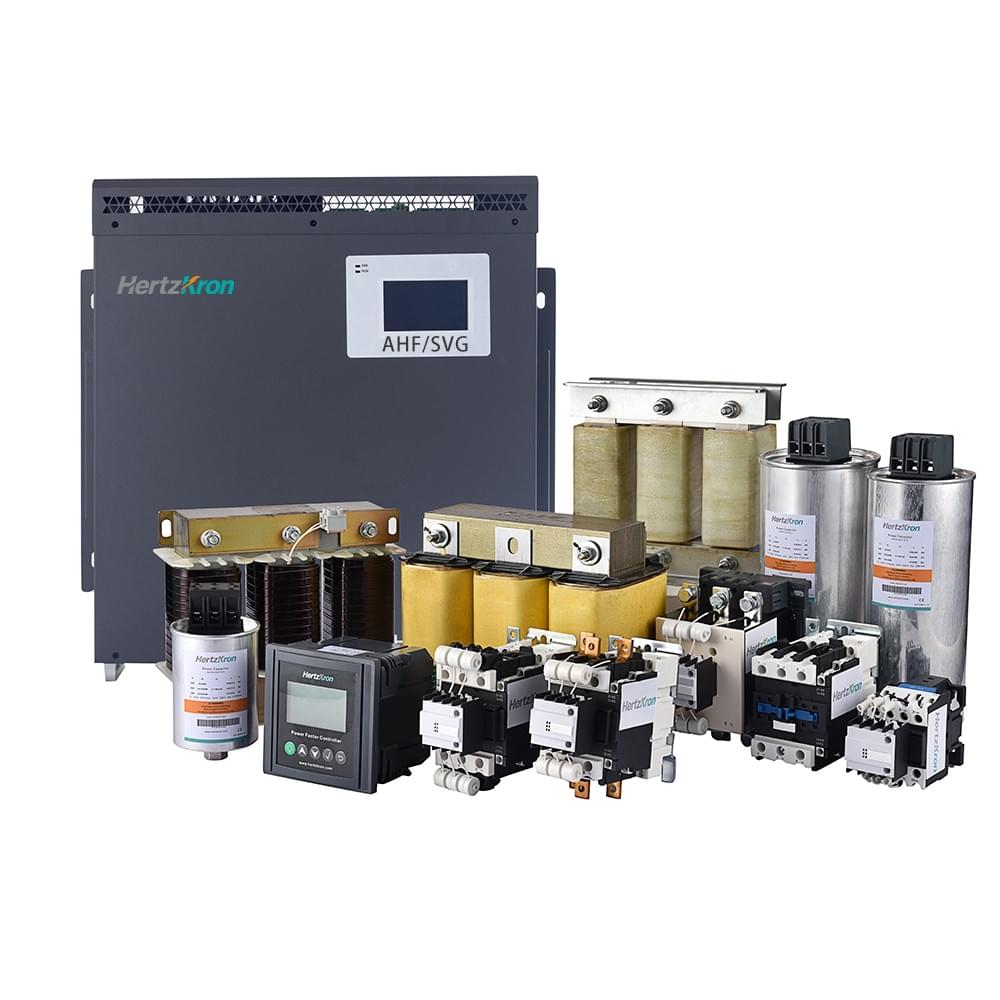
This article comprehensively analyzes the working principles, advantages, disadvantages and applicable scenarios of the two mainstream compensation solutions, helping practitioners avoid pitfalls and make scientific selections.
1. Capacitor Compensation: A Cost-Effective Basic Solution
Capacitor reactive power compensation is the most long-standing and widely adopted classic solution for PV power stations. It mainly consists of reactive power compensation controllers and capacitor banks. With mature technology, it fits the majority of conventional PV operating conditions.
1.1 Working Principle
The reactive power compensation controller monitors real-time reactive power and power factor on the grid side, and switches capacitor banks automatically according to system operating status.
- When the system suffers insufficient reactive power and low power factor, capacitor banks are switched on for reactive power compensation.
- When over-compensation occurs and grid voltage rises, part of the capacitor banks are switched off, so as to maintain reactive power balance of the power grid.
1.2 Core Advantages
- Low overall cost: The procurement, installation and commissioning costs are far lower than those of SVG, delivering outstanding cost performance and suiting the budget of small and medium-sized PV power stations.
- Simple O&M: The equipment features a simple structure without sophisticated precision components. Daily work only includes routine inspection and dust removal, which can be handled by general O&M staff with low technical barriers.
- Low self-power consumption: It barely generates additional energy consumption during operation, causing no extra power loss for the power station and ensuring favorable long-term economic benefits.
- High operational stability: Free of sophisticated power electronic devices, it has strong resistance to conventional electromagnetic interference and an extremely low failure rate under normal working conditions.
1.3 Inherent Limitations & Optimization Solutions
Restricted by its stepped compensation with fixed capacitance values, capacitor compensation has inherent drawbacks. Its compensation accuracy is limited and highly dependent on the precision of the controller. Unreasonable grouping of capacitors will easily lead to under-compensation or over-compensation, and further impair grid power quality.
There is no need to blindly replace the equipment. Optimized solutions from professional manufacturers can effectively solve the above problems.
Taking Hangzhou Shiyu, a professional manufacturer of reactive power compensation equipment, as an example: the company first conducts an overall assessment on the reactive power demand of the power station system, and configures capacitor banks with unequal capacities in a refined manner based on installed capacity, load characteristics and grid parameters. Its self-developed reactive power compensation controller addresses the pain points of traditional equipment in terms of hardware, algorithms and working condition adaptability, greatly improving compensation accuracy to fully meet grid connection standards for most conventional power stations.
Compared with ordinary controllers, the reactive power compensation controller developed by Hangzhou Shiyu has multiple core strengths tailored for complex grid-connected conditions of PV stations:
- High measurement and compensation accuracy: Equipped with high-precision power processing chips and mature algorithms, it eliminates sampling errors of traditional controllers. It can accurately capture subtle reactive power fluctuations of the grid. Combined with refined capacitor grouping, it thoroughly solves under-compensation and over-compensation problems, and keeps the power factor within the compliance range for grid connection.
- PV-specific four-quadrant control: Optimized exclusively for PV grid connection scenarios, it adapts to different grid connection points including the transformer side and load side. It supports compensation under special operating conditions such as no-load and light-load transformers, and fixes the compensation failure of traditional equipment during PV startup, shutdown and output fluctuation.
- Strong anti-interference capability: It features excellent harmonic suppression and electromagnetic interference resistance, and operates stably on PV sites with slight harmonics and electromagnetic interference to ensure continuous and effective compensation strategies.
- Fast response and dynamic adaptation: It responds rapidly to dynamic PV output fluctuations and grid reactive power changes, greatly optimizing the dynamic performance of stepped capacitor compensation to achieve near high-precision compensation at a much lower cost than SVG.
2. SVG: Advanced Solution for High-Precision Dynamic Compensation
SVG is a dynamic reactive power compensation device based on advanced power electronic conversion technology. It is currently the preferred advanced option for large-scale PV power stations and facilities under complex working conditions, featuring high precision, fast response and automatic dynamic compensation.
2.1 Working Principle
SVG detects and dynamically adjusts reactive power in real time. It can both generate capacitive reactive power and absorb inductive reactive power. With millisecond-level response to grid fluctuations, it realizes continuous and smooth reactive power compensation, completely overcoming the accuracy defects of stepped compensation.
2.2 Core Advantages
- Ultra-fast response: Millisecond-level dynamic response enables it to adapt rapidly to PV output fluctuations and sudden load changes, and stabilize grid voltage effectively.
- Superior compensation accuracy: It realizes stepless adjustable reactive power and maintains the power factor above 0.98 easily, fully complying with stringent grid connection standards.
- Integrated harmonic suppression: It can effectively restrain grid harmonics and improve power quality, making it suitable for working conditions with severe harmonic interference.
- Wide adaptability: It performs well in PV systems with frequent load fluctuations and unstable voltage, delivering far better grid connection stability than traditional capacitor compensation.
2.3 Non-Negligible Drawbacks
The superior performance of SVG comes with higher application thresholds and greater O&M risks, which are often overlooked by power station owners and result in surging long-term O&M costs:
- Strict environmental requirements: Integrated with a large number of sophisticated power semiconductor components, SVG relies on heat dissipation fans for stable operation. It is prone to electrical creepage, short circuits and component burnout in dusty, corrosive or coastal high salt-fog environments.
- High maintenance cost: With a highly integrated and sophisticated structure, on-site disassembly and repair are impossible. Once a fault occurs, the equipment usually needs factory repair or overall replacement, leading to long downtime.
- Hidden power charge risks: During equipment maintenance, the power station will face reactive power shortage and a sharp drop in power factor, which is highly likely to incur power factor adjustment penalties and cause dual economic losses.
- High initial investment: The procurement and installation costs are much higher than those of capacitor compensation, resulting in poor cost performance for small-scale power stations.
- High self-power consumption: As a high-power power electronic device, SVG operates continuously around the clock. Its heat dissipation and power modules produce constant energy consumption. The considerable self-power consumption increases the basic power loss of the power station, leading to higher long-term implicit operating costs compared with capacitor compensation.
The core principle for reactive power compensation equipment selection is matching working conditions, ensuring compliance and maximizing economic benefits, rather than simply choosing the most expensive product.
For conventional PV operating conditions, finely optimized capacitor compensation can fully replace SVG, cutting down substantial equipment and O&M expenses. For scenarios with drastic fluctuations, severe harmonics and strict grid connection requirements, SVG is irreplaceable for its outstanding dynamic compensation performance and a must-have to guarantee stable operation of power stations.
We hope this guide helps PV industry practitioners and power station owners avoid selection pitfalls, adopt the optimal compensation solution, and achieve compliant grid connection, efficient O&M and steady revenue growth for PV power stations.