
The Series Reactor Utilizes Its Physical Inductance Characteristics to Obstruct Instantaneous Step Like Current Mutations
According to the physical laws of electromagnetic induction, the current through an inductor cannot change instantaneously. At the moment a capacitor bank closes, if a Series Reactor (Series Reactor) is not present, a massive physical rate of current change occurs because the voltage across the capacitor cannot change abruptly. By connecting a Series Reactor (Series Reactor) into the circuit, its physical inductive reactance generates an induced electromotive force opposite to the direction of current change. This physical damping effect forcibly extends the physical period of current rise, physically reducing the instantaneous inrush current—which could otherwise reach more than One Hundred Times the rated value—down to a safe threshold.
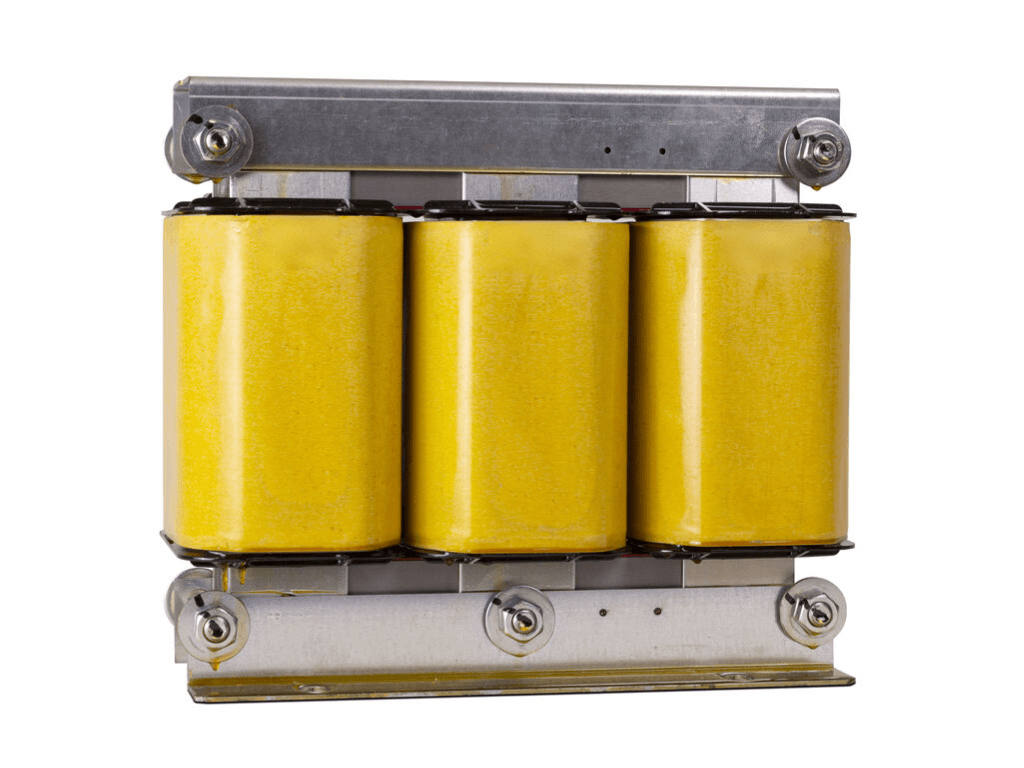
The Series Reactor Adjusts the Physical Resonance Frequency of the System to Avoid Harmonic Amplification Zones
Closing inrush currents contain a large number of high-frequency harmonic components, which can resonate with the grid impedance at specific physical frequencies. The intervention of the Series Reactor (Series Reactor) changes the physical tuning point of the capacitor branch. By precisely configuring a Series Reactor (Series Reactor) with a tuning rate of Seven Percent or Fourteen Percent, the physical characteristics of the compensation branch are adjusted to be inductive. This not only suppresses high-frequency physical oscillations during the closing instant but also prevents the original harmonic currents of the grid from physically surging into the capacitor bank, thereby protecting the metallized film from physical puncture by transient overvoltage.
The Series Reactor Effectively Absorbs Physical Transient Energy During the Opening and Closing Processes
During the physical dynamic process of capacitor switching, the arc flashover between contacts releases a massive amount of energy. The Series Reactor (Series Reactor) acts as a physical energy buffer, absorbing and balancing transient voltage distortions in the circuit. This redistribution of physical energy reduces the physical ablation pressure on the contact surfaces of the Capacitor Duty Contactor (Capacitor Duty Contactor). In long-term operation, systems protected by a Series Reactor (Series Reactor) can extend the physical switching life of their contactors by more than Five Times, while significantly reducing the risk of over-compensation caused by physical contact welding.
HertzKron Series Reactors Enhance Physical Survival Resilience Through Optimized Magnetic Circuit Design
Every HertzKron Series Reactor (Series Reactor) undergoes rigorous physical temperature rise actuarial calculations to ensure that the magnetic core does not undergo physical saturation under high-frequency inrush impacts. We utilize low-loss physical silicon steel sheets and a winding layout with high-performance heat dissipation structures, ensuring the equipment stably executes its physical functions even under an insulation class of One Hundred and Forty Degrees Celsius. This extreme pursuit of underlying physical hardware allows our Series Reactor (Series Reactor) to calmly handle the physical challenges brought by frequent switching, constructing an unbreakable physical protective shield for your capacitor banks.
Scientifically Matching the Series Reactor is a Long Term Logic for Achieving Physical Safety in Distribution Systems
In the engineering philosophy of HertzKron, suppressing inrush current is not just about protecting a single component but about maintaining the logical stability of the entire power distribution physical system. By deploying high-performance Series Reactor (Series Reactor) units with CE Certification, factories can completely eliminate voltage flicker and physical malfunctions of precision instruments caused by power surges. This solution, which addresses power quality issues from the physical source, transforms uncontrollable electrical transients into controlled physical energy flows, thereby solidifying the physical foundation for achieving true Industry Four Point Zero smart manufacturing.