
Over the next ten years, the global power grid will undergo its most drastic paradigm shift since the era of Tesla and Edison. As Distributed Energy Resources (DERs), Battery Energy Storage Systems (BESS), and large-scale Electric Vehicle (EV) charging infrastructure integrate into the system, the traditional "centralized, unidirectional" grid is evolving into "decentralized, bidirectional" Smart Microgrids. During this evolution, the physical characteristics of the grid have become complex beyond precedent.
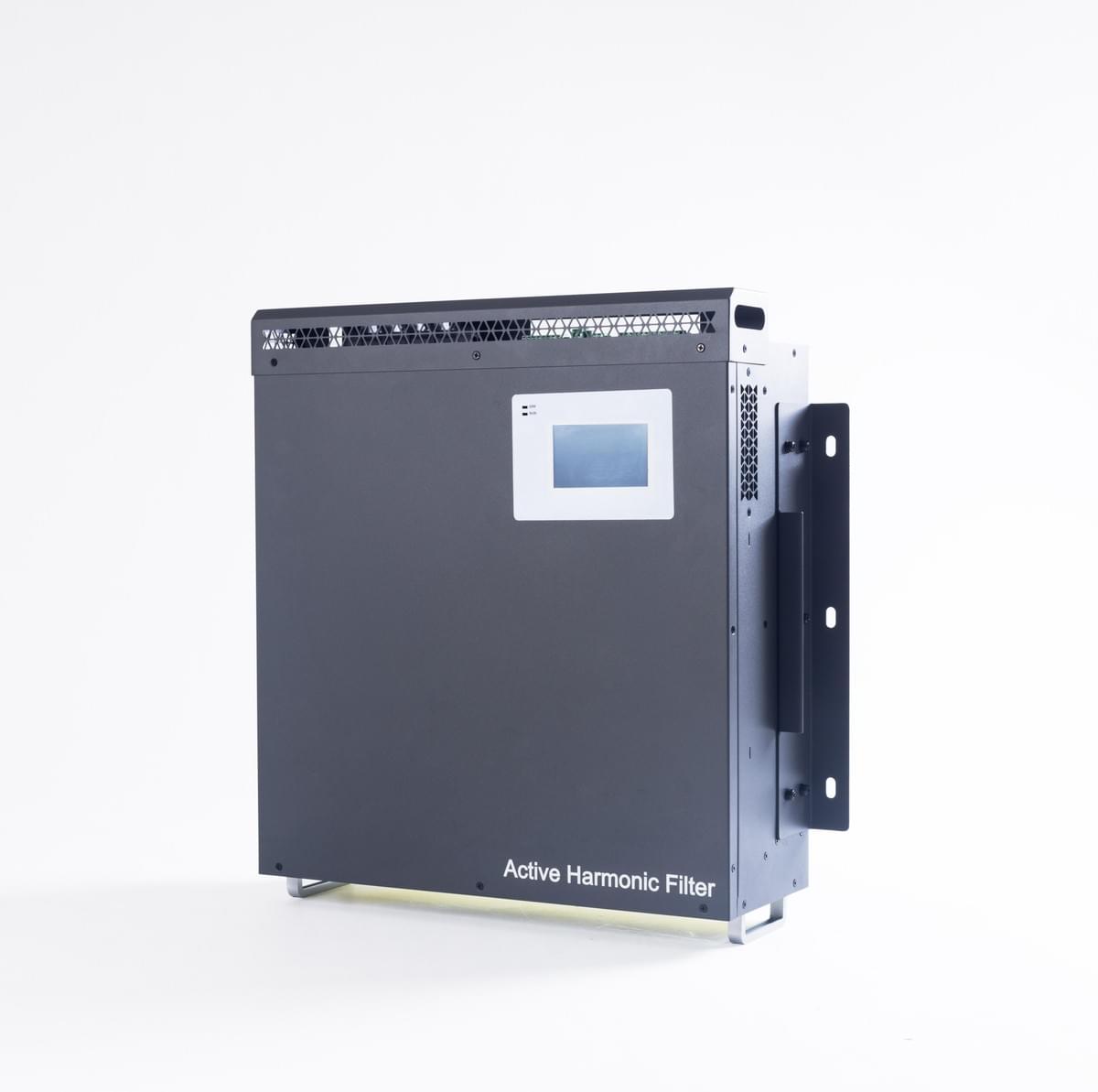
For HertzKron, we see not only a technological iteration but a fundamental restructuring of electrical order. Harmonic pollution, voltage distortion, and frequency fluctuations act as "undercurrents" within the grid, threatening the stability of the entire system. The AHF(Active Harmonic Filter) (Active Harmonic Filter), acting as a "digital antibody" capable of sensing and neutralizing grid distortion in real-time, is evolving from a peripheral auxiliary tool into the "central nervous system" of the Smart Microgrid.
Chapter 1: The Physical Predicament of Smart Microgrids and the Underlying Logic of AHF(Active Harmonic Filter)
1.1 The Surge of Non-Linear Loads: The Microgrid’s "Allergic Reaction"
The core of a Smart Microgrid is efficiency, but high efficiency often brings high pollution. Modern industry relies heavily on Variable Frequency Drives (VFDs), server power supplies, and LED lighting systems—all of which are inherently non-linear loads. When these loads draw power, their current waveforms are no longer smooth sine waves; instead, they appear as intermittent, peaked, non-sinusoidal waves.
According to Fourier Series decomposition theory, any non-sinusoidal periodic current waveform can be decomposed into a fundamental frequency current and a series of harmonic currents at integer multiples of that fundamental frequency. In a Smart Microgrid, these harmonic currents cause the following fatal impacts:
- Transformer Circulating Loss: High-order harmonics cause a sharp increase in hysteresis and eddy current losses within transformer cores, forcing transformers to derate due to overheating before reaching their rated load.
- Neutral Line Overload: In three-phase four-wire systems, 3rd and multiple-of-3 harmonics (zero-sequence harmonics) accumulate on the neutral line, causing neutral currents to far exceed phase currents, creating a fire hazard.
- Complexity of Reactive Power: The presence of harmonics invalidates traditional definitions of reactive power, introducing the concept of Distortion Power. This causes traditional capacitor compensation schemes to fail or, worse, trigger parallel resonance.
1.2 Active Mitigation: AHF(Active Harmonic Filter)’s "Vector Counteraction" Logic
The core logic of AHF(Active Harmonic Filter) lies in its high-speed signal processing and precision inverter circuit control. It is not merely a filter; it is a Controlled Current Source.
Its operational principle can be divided into four microscopic steps:
- High-Frequency Sampling: Utilizing high-precision Current Transformers (CTs), the internal Digital Signal Processor (DSP) or FPGA of the AHF(Active Harmonic Filter) samples the load current waveform tens of thousands of times per second.
- Harmonic Extraction: Using Instantaneous Reactive Power Theory (p-q theory) or detection algorithms based on Synchronous Rotating Reference Frames (dq transformation), the AHF(Active Harmonic Filter) calculates the harmonic components requiring compensation from the complex composite current in real-time.
- Pulse Width Modulation (PWM): Based on the calculated compensation instructions, the controller generates high-frequency switching signals to manage the conduction and cutoff of internal high-power power electronic devices (typically IGBTs).
- Injection Counteraction: The AHF(Active Harmonic Filter) generates a compensation current of equal magnitude but opposite phase to the detected harmonic current and injects it into the grid. According to Kirchhoff’s Current Law (KCL), these two currents perfectly cancel each other out at the Point of Common Coupling (PCC), returning the grid-side current to a pure 50Hz/60Hz sine wave.
This "dynamic vs. dynamic" logic ensures that the AHF(Active Harmonic Filter) responds within microseconds, regardless of how violently the load fluctuates.
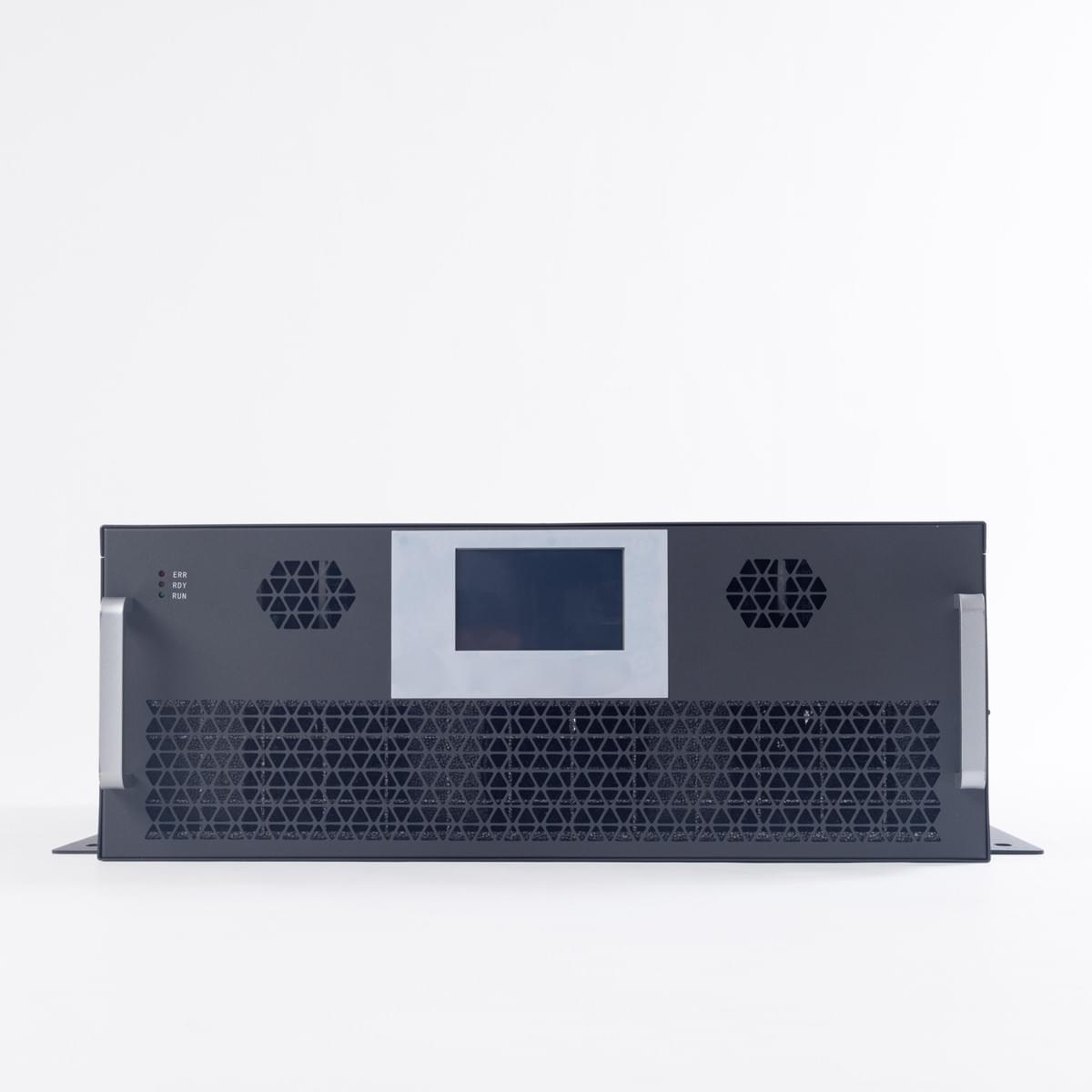
Chapter 2: Core Trends for the Next Decade: The Multidimensional Role of AHF(Active Harmonic Filter)
2.1 The "Frequency and Voltage Stabilizer" of the Smart Microgrid
In the Smart Microgrids of the future, Islanding Mode will become common. When a microgrid detaches from the main grid to operate independently, the system lacks the support of massive rotational inertia. At this moment, the start-up of any large load (such as heavy motors) or the connection of non-linear loads will cause instantaneous voltage distortion.
The AHF(Active Harmonic Filter) acts as the "Grid Buffer" in this scenario:
- Dynamic Response Advantage: Unlike traditional passive filters that require charging time or are limited by reactor response speeds, the full-load response time of an AHF(Active Harmonic Filter) is typically less than 5ms. This ultra-fast response capability effectively suppresses Voltage Flicker, preventing sensitive equipment from crashing due to instantaneous drops in power quality.
- Multi-functional Integration: In the HertzKron technological roadmap, the AHF(Active Harmonic Filter) of the future will no longer be single-functional. It will deeply integrate SVG (Static Var Generator) functions. This means a single device can simultaneously handle harmonic mitigation, reactive power compensation, and three-phase imbalance correction. For the microgrid, this significantly saves installation space and simplifies the coordinated control logic of the system.
2.2 The Digital Shield Protecting "High-Precision Assets"
In the industrial upgrades of the next decade, semiconductor manufacturing, high-end laboratories, and Supercomputing Centers (IDCs) will become the primary users of microgrids. These sectors demand near-perfect voltage quality (typically requiring THDu < 3%).
- Suppressing Zero-Crossing Drift: Many precision devices rely on "Zero-crossing detection" for control logic. Severe harmonics cause glitches at the zero-crossing point, leading to control system misfires. AHF(Active Harmonic Filter) ensures a pure baseline for control logic through real-time waveform shaping.
- Extending Asset Physical Life: In grids contaminated by harmonics, rotating motors generate counter-torque, leading to increased bearing wear. Capacitors may suffer premature breakdown due to harmonic-induced overvoltage. The intervention of AHF(Active Harmonic Filter) essentially provides "Electrical Protective Suits" for these expensive industrial assets.
Chapter 3: The Evolving AHF(Active Harmonic Filter): HertzKron’s Selection Benchmarks and Engineering Logic
In the HertzKron global supply chain vetting system, we look beyond the spec sheet to the application of First Principles.
3.1 The Generational Dominance of 3-Level Inverter Architecture
Traditional 2-Level AHF(Active Harmonic Filter)s are being marginalized in the Smart Microgrid market.
- Physical Logic: By adding a neutral point, the 3-Level architecture reduces voltage stress on IGBTs by 50%. This not only enhances component durability but also provides finer Pulse Width Modulation (PWM) resolution.
- Harmonic Resolution: Compared to 2-level systems, 3-level waveforms are significantly smoother. In handling high-order harmonics (25th to 50th), the residual ripple is minimized, reducing interference with precision communication equipment to negligible levels.
3.2 Thermal Management and "Order Durability" in Extreme Environments
For the 50°C+ heat of UAE deserts or the corrosive dust of Turkish industrial zones, an AHF(Active Harmonic Filter)’s lifespan depends on its internal order.
- Independent Air Duct Design: We isolate high-power heat-generating components (reactors, IGBTs) from sensitive control circuits (DSPs, capacitors).
- Thermal Simulation Validation: Manufacturing chains partnered with HertzKron must undergo thermal imaging verification under full-load conditions. We understand that once thermal logic fails, the lifespan of internal electrolytic capacitors decays exponentially.
Chapter 4: Smart Microgrid Field Applications: The Multidimensional Role of AHF(Active Harmonic Filter)
4.1 Steel and Heavy Industry: The Terminator of Voltage Flicker
In heavy industrial microgrids, the frequent starting of Electric Arc Furnaces (EAF) or massive cranes causes instantaneous power deficits.
The Dual Mission of AHF(Active Harmonic Filter): It must not only filter out THDi as high as 20% but also act as an "instantaneous reactive source" to support busbar voltage. Through ultra-fast compensation, it significantly reduces under-voltage tripping incidents on production lines.
4.2 Medical and Biopharma: Zero-Redundancy Power Purity
In the next decade of biomanufacturing, centrifuges and imaging equipment (MRI/CT) demand an ultra-"quiet" grid.
Eliminating Zero-Crossing Distortion: AHF(Active Harmonic Filter) ensures the voltage waveform is glitch-free at the zero-crossing point, protecting expensive diagnostic equipment from logic errors.
Chapter 5: Economics of the Next Decade: From "Expense" to "Asset"
5.1 Quantifying the ROI Model
While many enterprises view AHF(Active Harmonic Filter) as an expense, HertzKron advocates treating it as Asset Appreciation.
- Efficiency Gains: By eliminating skin effect losses caused by harmonics, line losses can be reduced by 5%–8%.
- Preventive Maintenance (OpEx): Data shows that factories with high-performance AHF(Active Harmonic Filter)s experience a 70% decrease in circuit breaker misoperations and motor burnouts.
5.2 Carbon Footprint and Green Credits
As carbon tariffs like CBAM advance globally, the efficiency of a smart microgrid directly correlates with export competitiveness. The efficiency gains brought by AHF(Active Harmonic Filter) will become a critical leverage point for enterprises to secure "Green Orders."
Conclusion: Restoring Order, Foreseeing the Future
The Smart Microgrid of the next decade will be a complex, self-adaptive ecosystem. The AHF(Active Harmonic Filter) is the indispensable "cleaner" and "officer" within that ecosystem.
HertzKron will continue to stand at the forefront of the global supply chain, selecting and delivering the most logically profound and time-tested power order reconstruction solutions for you.
HertzKron: Restoring Order to Power.