
In the physical architecture of high-end power electronics, the performance of an AHF (Active Harmonic Filter) is not measured by its dimensions, but by its "conditioned reflex" within the microsecond domain. When facing instantaneously fluctuating non-linear loads, if the governance speed lags by even half a cycle, the compensation current physically evolves from a "cure" into a "toxin." To provide a clear view of this high-stakes speed competition, we must deeply deconstruct two core physical dimensions from the bottom up: Total Response Time and Step Response Time.
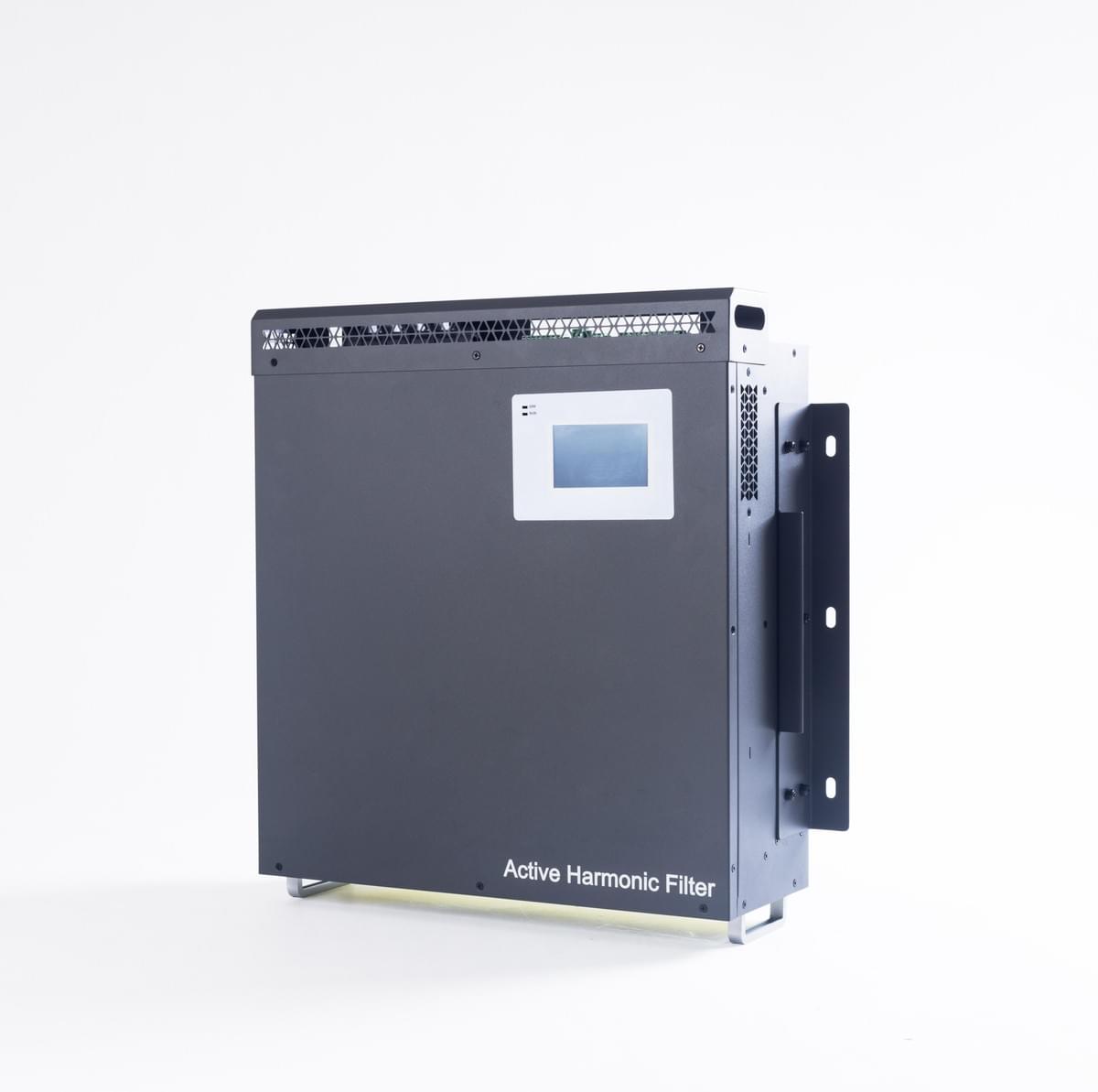
Total Response Time is the physical lifeline for an AHF (Active Harmonic Filter) to reject "Phase Lag"
When discussing the Total Response Time of an AHF (Active Harmonic Filter), we are essentially analyzing a complete physical closed-loop cycle from perception to execution. This cycle initiates when the sampling current transformer captures harmonic distortion signals in the grid, proceeds through complex instantaneous reactive power vector calculations in high-frequency Digital Signal Processors (DSP), and culminates in the IGBT power modules outputting a precise counter-current. For a high-performance AHF (Active Harmonic Filter), this total response must be compressed within 5ms or less. If this duration is excessive, the compensation current cannot physically align in phase with the harmonic current. This phase displacement causes the vector intended to cancel harmonics to deviate, instead superimposing onto the original harmonic waveform and inducing severe physical secondary pollution, which further distorts the sampling voltage profile. HertzKron optimizes the underlying parallel computing architecture to ensure extreme compression of this total response, allowing the compensation current to precisely "cancel" rather than "chase" harmonics at the physical level.
Step Response Time represents the "Muscular Explosiveness" of the AHF (Active Harmonic Filter) against rapid load impacts
If Total Response Time measures "brain decision speed," then Step Response Time is the pure hardware reflex of the AHF (Active Harmonic Filter). It specifically refers to the physical time required for the inverter's output current to surge from 10% to 90% of its rated value after a command is issued—a process that must be controlled within 0.1ms. In industrial grids housing spot welders, large-scale laser cutters, or precision semiconductor lines, load fluctuations exhibit extremely high $di/dt$ characteristics (rate of current change). An AHF (Active Harmonic Filter) with an ultra-short step response time acts as precision body armor, completing physical neutralization at the exact instant of a harmonic surge. The hardware topology of HertzKron significantly reduces physical inductance stress within the inverter loop, ensuring that power modules can suppress power fluctuations with near-infinite explosiveness, preventing transient surges from puncturing transformers or interfering with sensitive PLC logic circuits.
Coupling depth between sampling precision and algorithms determines the response limits of the AHF (Active Harmonic Filter)
The breakthrough in dual response times ultimately depends on the original physical capture frequency of the sampling current and sampling voltage. If the front-end sampling system of the AHF (Active Harmonic Filter) possesses physical dead zones or insufficient digital slicing frequencies, all subsequent algorithmic optimizations lose their foundation. The multi-core sampling logic utilized by HertzKron performs high-speed scans of the grid waveform tens of thousands of times per second, extracting full-spectrum harmonic features from the 2nd to the 50th order. This deep coupling of high-frequency sampling and high-speed algorithms drastically shortens the physical path between sensor perception and power module execution. Consequently, the AHF (Active Harmonic Filter) no longer passively waits for harmonics to generate before treating them; instead, it constructs a dynamic, predictive controlled voltage source within microseconds to iron out every minute distortion in the grid in real-time.
Physical Thermal Balance and CE Certification: The safety foundation for full-speed AHF (Active Harmonic Filter) operation
While pursuing the physical limits of Total and Step Response Times, the internal power components of the AHF (Active Harmonic Filter) endure massive thermal stress and electromagnetic impact. IGBT modules switching at high frequencies release immense energy in negligible timeframes; if the cooling design or circuit layout violates thermodynamic logic, the equipment faces the risk of physical breakdown. Selecting a HertzKron solution with CE Certification means acquiring a technical architecture that has undergone rigorous physical dynamic simulation testing. This architecture not only reshapes the boundaries of response speed but also utilizes precise Electromagnetic Compatibility (EMC) design to ensure the AHF (Active Harmonic Filter) remains physically stable and logically reliable even during full-speed, high-frequency switching. This internal physical resilience is the core guarantee for an AHF to safeguard industrial grids and permanently terminate harmonic interference.