
In the physical design of power distribution systems, the ratio between transformer capacity (kVA) and the required capacitor compensation capacity (kVAR) directly determines the operational efficiency and physical load-carrying capacity of the entire supply system. If compensation is insufficient, the system faces penalties for low power factor and voltage fluctuations; if over-compensated, it triggers significant risks of sampling voltage elevation and physical resonance.
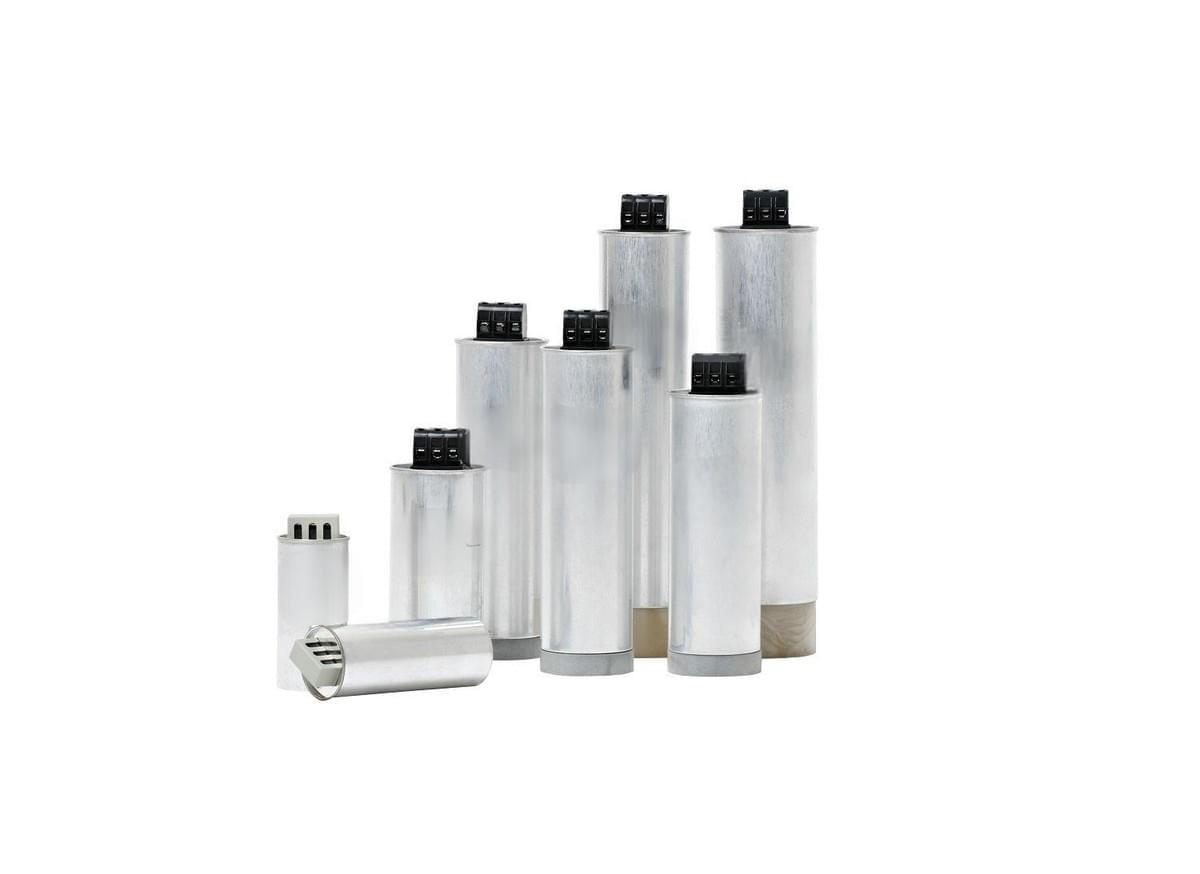
1. Establishing the Capacitor configuration baseline based on transformer rated reactive deficit
In preliminary estimations, the industry's recognized "rule of thumb" typically suggests configuring the Capacitor capacity at 20% to 40% of the transformer's rated kVA. For instance, for a 1000kVA transformer, the baseline compensation is usually set around 300kVAR. This percentage-based physical configuration method provides fundamental reactive support to offset the inductive reactive power generated by the transformer’s own excitation branch and the physical load of small-scale inductive equipment, ensuring the power factor remains above 0.90 during light load periods.
2. Utilizing power factor correction coefficients for precise Capacitor KVAR requirements
When a facility has clear load data, precise physical calculations must be performed using trigonometric relationships. The required Capacitor volume depends on the tangent difference between the initial power factor ($$\cos \phi_1$$) and the target power factor ($$\cos \phi_2$$). The formula is: $$Q = P \times (\tan \phi_1 - \tan \phi_2)$$, where $$P$$ represents the active power carried by the transformer. Through exact calculation, we ensure the deployed Capacitor capacity perfectly offsets the phase displacement of the inductive vector. HertzKron engineering manuals emphasize that target power factors are typically set between 0.95 and 0.98, as pushing for a physical limit of 1.00 can lead to reactive power backfeeding into the grid.
3. Considering Capacitor load factors and physical design margins in harmonic environments
Do not select a Capacitor based solely on the values derived from formulas. In physical environments with 5th and 7th harmonics, the actual current flowing into the Capacitor will increase significantly due to waveform distortion. When configuring a Capacitor based on transformer capacity, if a detuned reactor is planned, a "voltage boost" calculation must be performed. The series reactor physically raises the terminal voltage across the Capacitor. HertzKron recommends that in harmonic conditions, the rated voltage of the selected Capacitor should be higher than the system voltage (e.g., 480V for a 400V system), with a 1.2x physical safety margin reserved to prevent physical breakdown due to overloading.
4. Dynamically allocating Capacitor step specifications and logic based on transformer load rate
Transformer loads are not static; therefore, the total Capacitor capacity must be physically divided into rational "steps." For a total requirement of 300kVAR, rather than using a single large-capacity unit, a modular combination such as $$25 \times 2 + 50 \times 5$$ should be utilized. This physical distribution ensures the controller can perform precise switching in the smallest increments when it detects changes in the sampling current. The HertzKron intelligent controller avoids frequent switching during light loads through limit analysis of sampled data, reducing physical mechanical wear on the Capacitor duty Contactor.
5. Standards for transformer no-load compensation and minimum Capacitor bank startup thresholds
When a transformer is at no-load or extremely light load, the inductive reactive power generated by the transformer core remains. When installing a Capacitor, the no-load reactive demand of the transformer (typically 2% to 3% of its capacity) must be considered. This portion of compensation must be resolved via fixed branches or the controller's minimum step. By strictly following CE Certification electrical design guidelines, we can not only calculate the total Capacitor volume but also precisely locate its physical intervention point, preventing terminal sampling voltage drops caused by excessive inductive impedance.
6. Achieving physical-level energy optimization through CE Certified HertzKron Capacitor units
After completing the capacity calculations, the physical quality of the components determines whether the system meets the standards. Selecting CE Certified HertzKron Capacitor and reactor units means you obtain a system designed with rigorous physical stress calculations. We do not just provide a kVAR number; we provide a closed-loop solution based on transformer impedance characteristics, harmonic frequencies, and thermal balance. This approach ensures the Capacitor compensation system maintains peak transformer efficiency under various complex operating conditions.